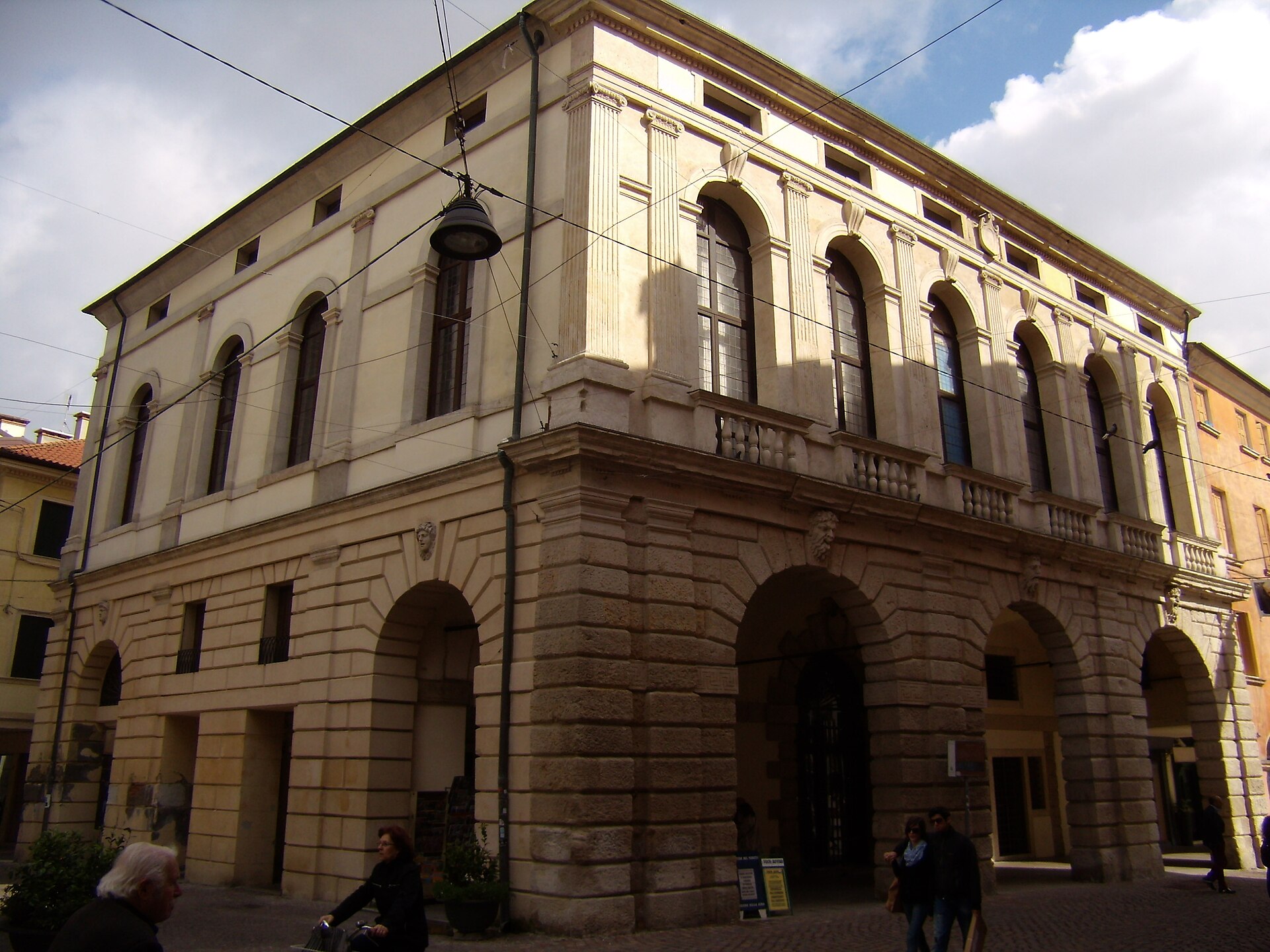
Beside Palazzo Roverella stands the square’s other great Renaissance palazzo. It tells, in stone, the story of a family on the rise. The Roncale had come to the Polesine from the valleys around Bergamo in about 1475. A century later they were among the most prominent families in the city. Giovanni Roncale, a Rovigo nobleman in the service of the Venetian Republic, had the palazzo built between 1550 and 1562; some sources date it to 1555. The design is attributed to the great Veronese architect Michele Sanmicheli, who built fortifications and palaces across Venice’s mainland territories, the Terraferma. The palazzo was meant to announce the family’s new rank to all.
A king in Rovigo
Though it was never finished, in the 16th century it became one of the most elegant palazzi in the city. Its moment of glory came in 1574. That year it hosted Henry III, King of France and Poland, during his journey through Italy: a King of France, the guest of a Rovigo family. For a family that had come down from the mountains a century earlier, welcoming a sovereign under its own roof was the sign of having truly arrived.
The Roncale kept the property until 1881: more than three centuries in the hands of one family. After various uses, in 1919 a bank bought the building and paid for a major restoration. Today the palazzo belongs to the Fondazione Cassa di Risparmio di Padova e Rovigo, which stages temporary exhibitions and cultural events here. From family residence to a space open to the city: the palazzo has changed its purpose, not its elegance.
The piano nobile
On the piano nobile, the grand main floor, a hall opens out beneath exposed beams. It is furnished with period pieces and two large tapestries, French or Flemish depending on the source. The palazzo also holds 18th-century canvases and paintings attributed to Mattia Bortoloni. Climb to the piano nobile and you enter rooms that keep the charm of a noble residence. Visiting during an exhibition is the best way to discover, beyond the works on show, the rooms that once welcomed a king.