It is the oldest religious foundation still active in the centre of Rovigo, and it bears the mark of the Este. In his will of 1292, Marquis Obizzo II d’Este, who died in 1293, asked for a convent to be built for the Friars Minor, the Franciscans. The convent rose near the ancient church of Santa Giustina. Since then, more than seven centuries, from the friars’ Gothic to the Neoclassical of the 1800s, have stayed enclosed within these walls.
The first church of San Francesco was built between 1297 and 1300, in the Gothic style. It followed Franciscan rules: a single nave, a timber truss roof and five chapels at the far end. In 1413 the church was enlarged with a right-hand aisle and five more chapels, which the noble families vied for.
A 19th-century face
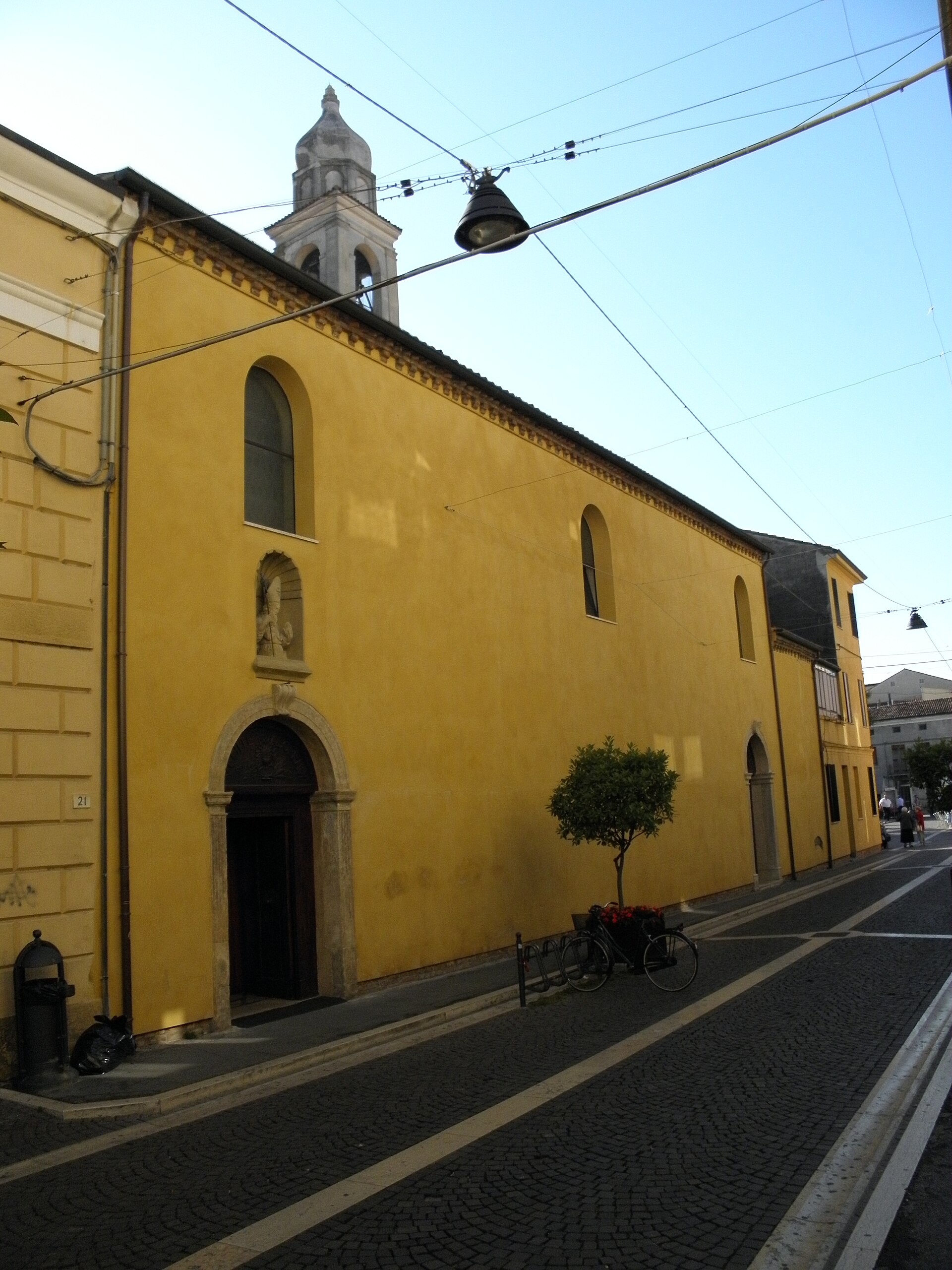
The greatest change came in the 19th century. Since 1806 the church has been the parish of Santi Francesco e Giustina. From 1826–1827 it was almost entirely transformed, and on 7 May 1837 it was consecrated. The Neoclassical façade, designed by Lorenzo Rossini, was built in the second half of the century and completed in 1892.
The result is a church that presents a 19th-century face. But look closely and the Middle Ages are still there: part of the original cloister, the 14th-century chapter house, five pointed arches on the outer side. And, on either side of the doorway, two coats of arms with the Este eagle, in memory of the founder. They are quiet details, easy to miss.
The works of art
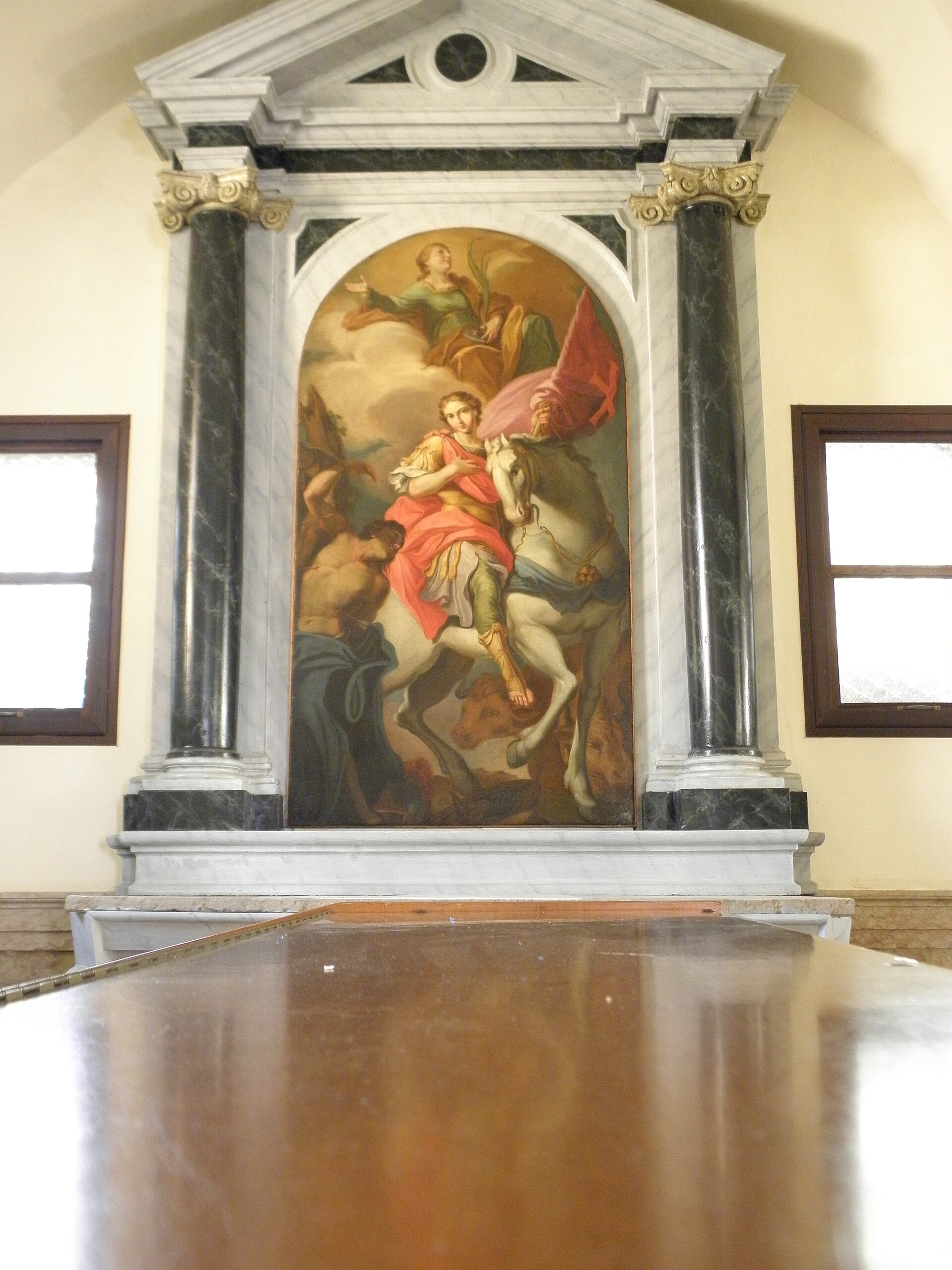
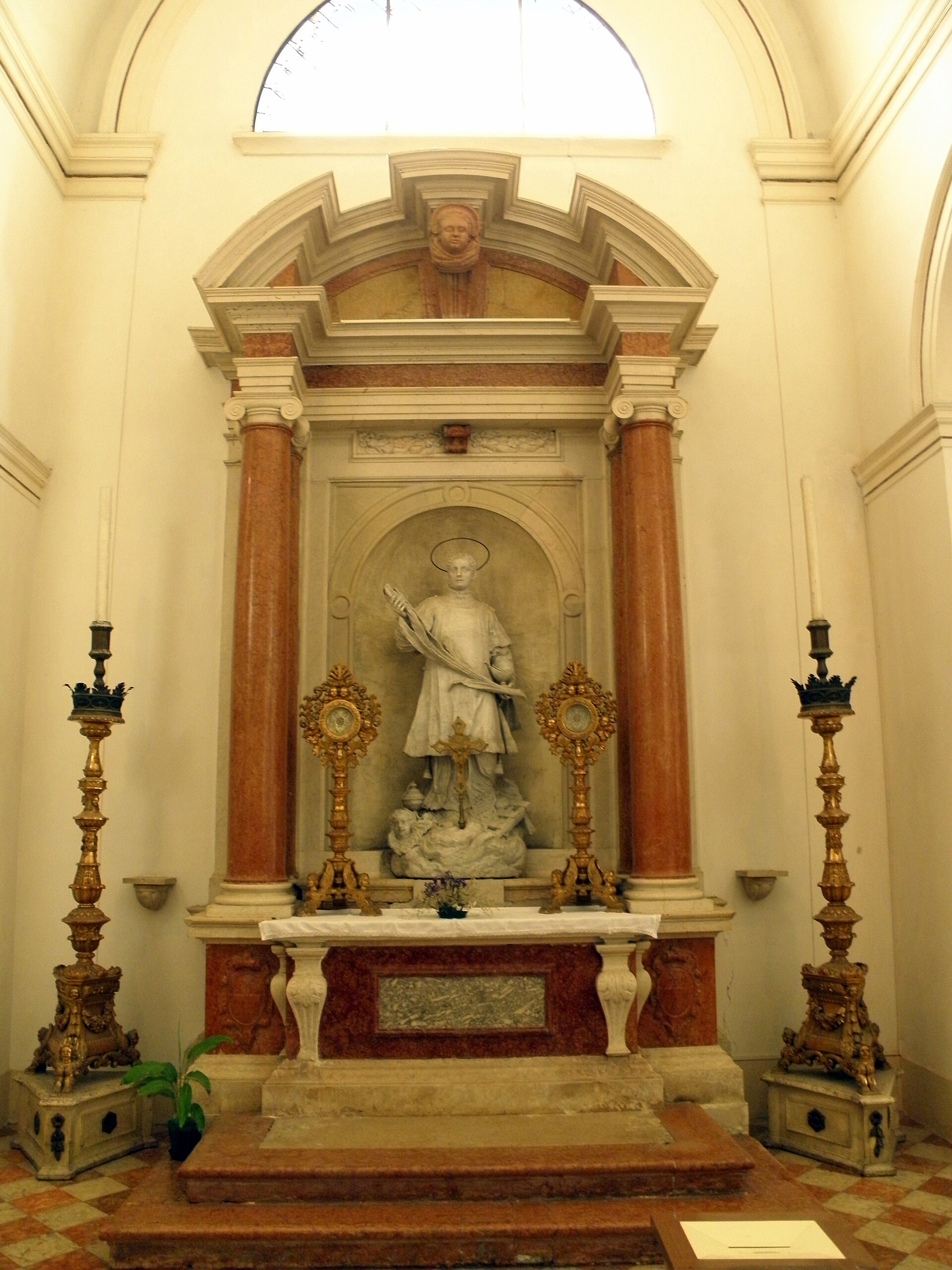
Inside are works of high quality. At the third altar on the right stands the marble statue of Saint Lawrence the Martyr by Giovanni Marchiori. In the sacristy hangs a Madonna and Child with Saint Anthony of Padua and a devotee by Giovanni Cariani, painted around 1530–1540.
At the third altar on the left is a Pietà with saints dated 1526, which one guide attributes to Tullio Lombardo. These are discreet masterpieces, to be sought out altar by altar, in a church that has changed its skin without losing the memory of its origins.