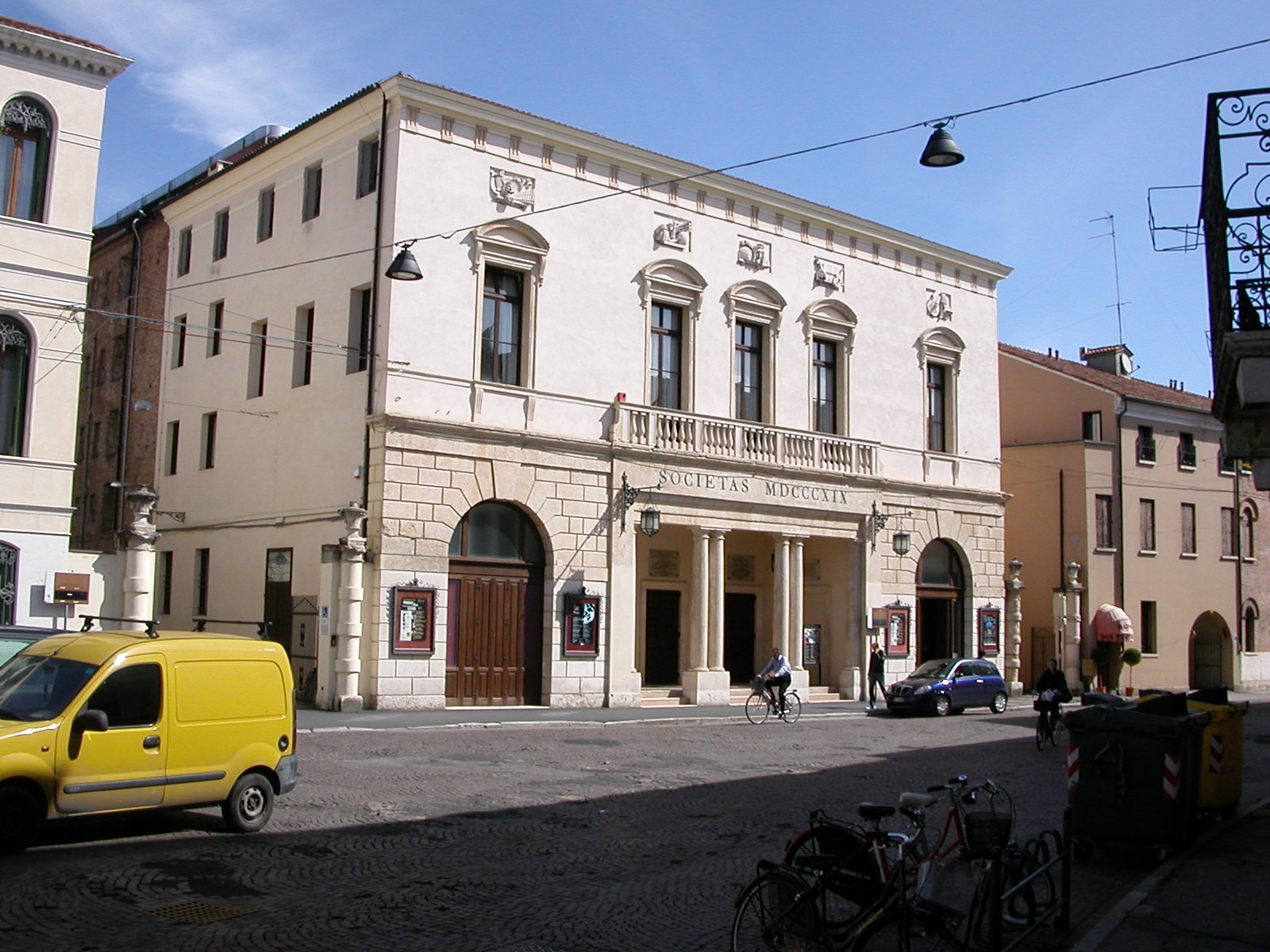
The Teatro Sociale was born of the ambitions of Rovigo’s 19th-century middle class. These were the years when Rovigo, having passed from the Venetian Republic (the Serenissima) to the Austrian-ruled Kingdom of Lombardy–Venetia, was becoming a provincial capital. The city wanted places for social and cultural life worthy of its new rank. The design, a horseshoe-shaped Italian-style theatre, was entrusted to the Rovigo architect Sante Baseggio. The auditorium opened on 3 March 1819 with “L’ombra di Fetonte”. The official inauguration followed on 26 April, with “Adelaide di Borgogna”, composed for the occasion by Pietro Generali. It was the start of a long bond between Rovigo and opera.
From flames to Liberty
In 1902 a fire destroyed the theatre completely. The rebuilding was entrusted to the Milanese engineer Daniele Donghi, and the new auditorium reopened in 1904. In two years the theatre rose from the ashes: the fire had not erased its calling. The decorations by Giovanni Vianello, from Padua, made it one of the first theatres in the Veneto to adopt the Liberty style, Italy’s Art Nouveau. Out of loss came a new face, modern for its time, which still welcomes audiences today.
The great voices
For a provincial city, the roll call is extraordinary. Some of the greatest voices of the 20th century have crossed its stage. Beniamino Gigli made his debut here in Ponchielli’s “La Gioconda”, shortly before Italy entered the Great War. Renata Tebaldi made her first appearance here in 1944 in Boito’s “Mefistofele”. Maria Callas sang “Aida” here in 1948, and Luciano Pavarotti played the Duke of Mantua in “Rigoletto” in 1962. Four names that are enough to tell of this stage’s prestige.
Since 1967 the Sociale has been recognised as a “Teatro di tradizione”, an official status for Italy’s historic opera houses. For more than two centuries it has hosted seasons of opera, dance, drama and jazz. The programme changes from year to year, but the calling stays the same. It is one of the few historic theatres left in a territory, the Polesine, that once had around fifty. To step into the auditorium is to sit where, for two centuries, Rovigo has come to listen.