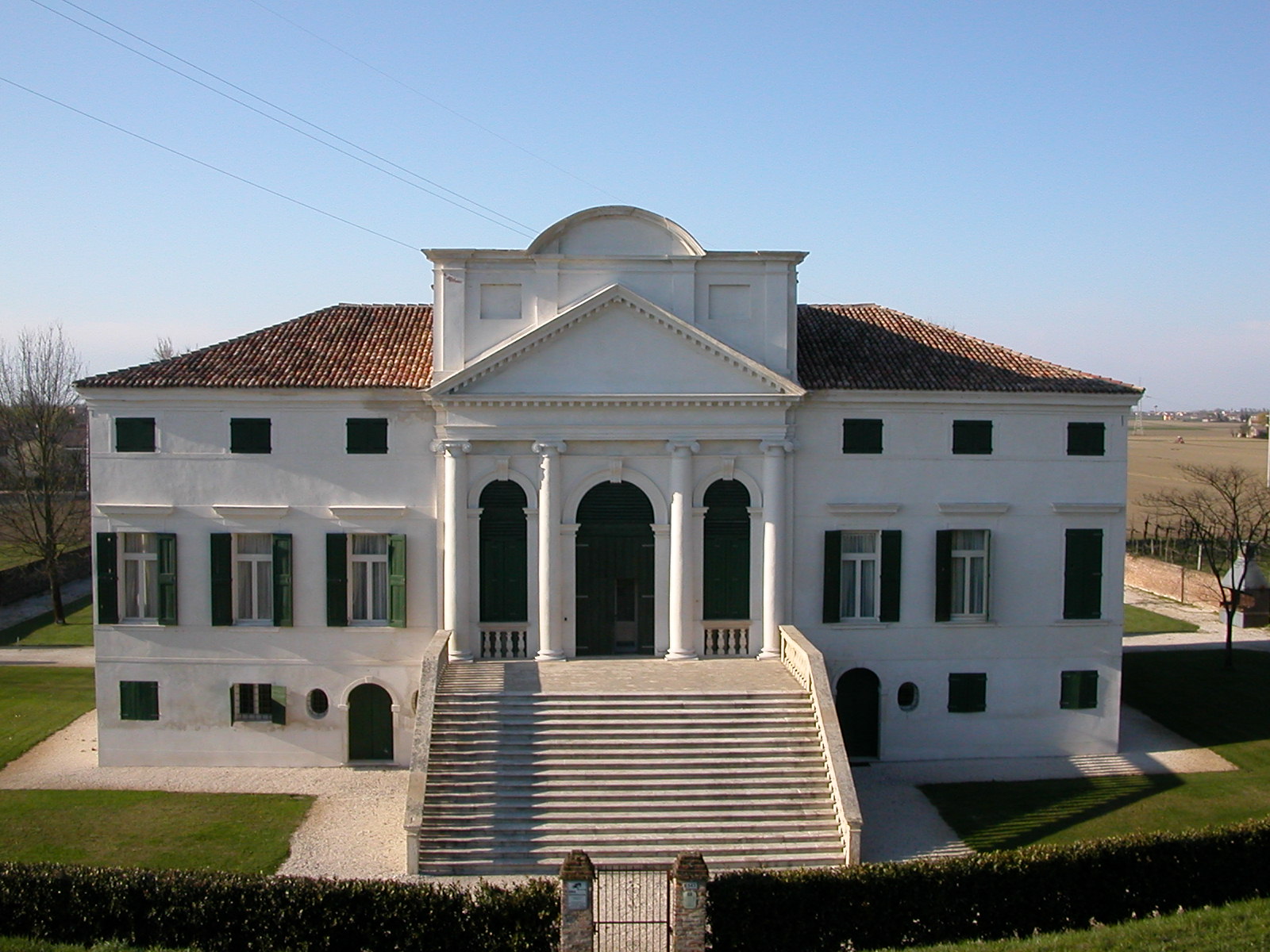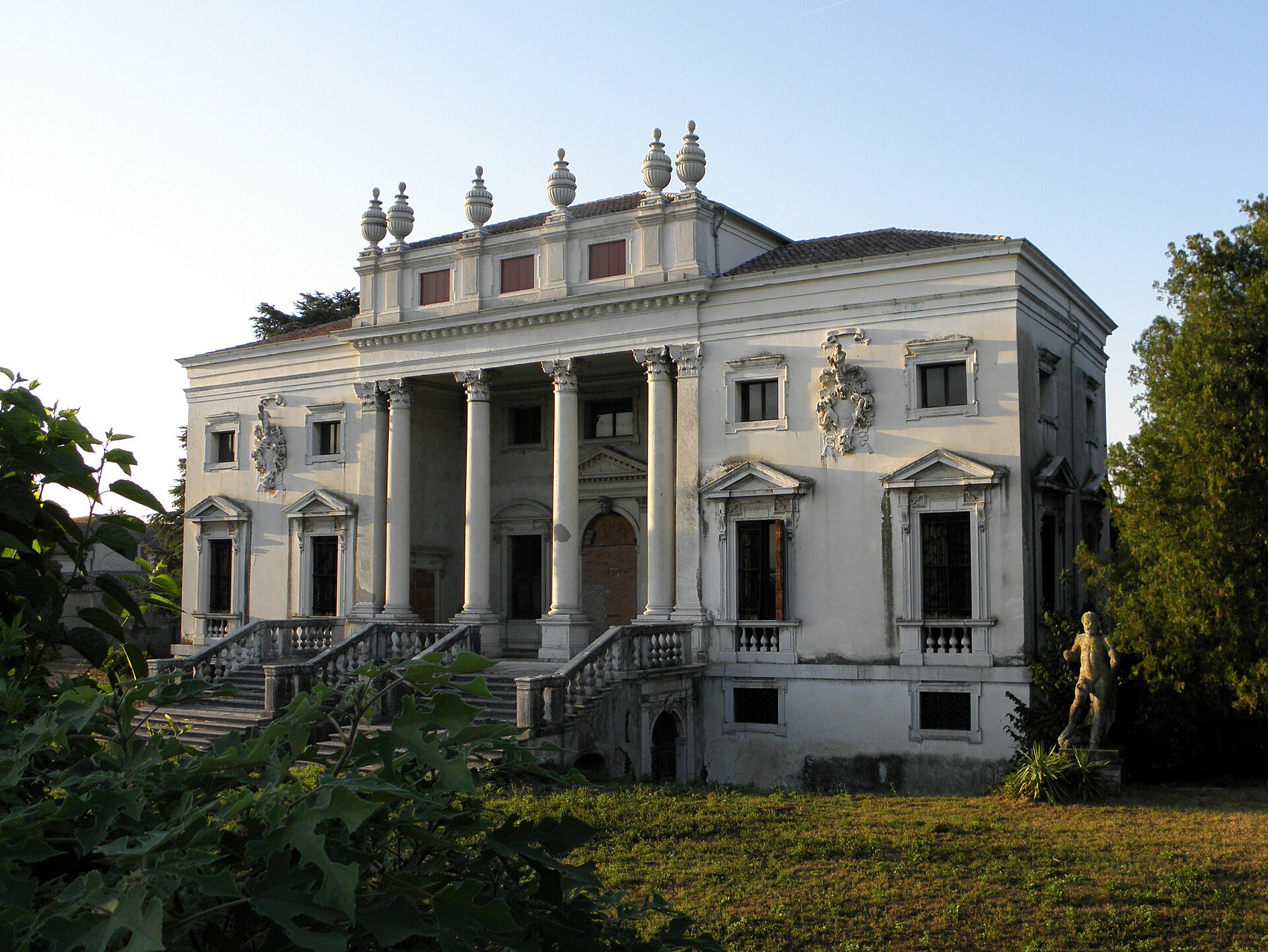
In a village of fewer than a thousand people hides one of the most theatrical villas in the Polesine. Villa Nani Mocenigo was built from around 1580 for the Nani, a Venetian family.
The principal patron was Agostino Nani, whom the FAI, Italy’s National Trust, describes as a “prestigious figure in the Venetian political world”. By tradition the design is attributed to Vincenzo Scamozzi, but firm documents are lacking. Some think of Baldassare Longhena instead. The architect’s name thus remains one of the villa’s small mysteries.
One villa, two faces
The villa has two souls, one on each side. The north front is 16th-century. The south façade, facing the Canalbianco canal, was rebuilt in the 18th century in Baroque forms by an architect whose name is unknown.
The complex includes a 16th-century chapel, farm buildings and an English-style park enclosed by walls. It is peopled by 18th-century mythological statues, attributed to the Albanese workshop of Vicenza or to Alvise Tagliapietra. Behind the gates, among the trees, they look like a small people of stone, waiting.
The interiors were decorated by 17th-century masters from Ferrara and Bologna, among them Gabriello Rossi and Francesco Ferrari.
The fire of 1946
On 17 January 1946 a fire devastated the interiors. Many frescoes and furnishings were destroyed. Later, Giuseppe Pedrocco restored the decorations of the staircase and of the rooms on the piano nobile, bringing back at least some of the lost splendour.
The name, too, keeps the memory of its owners. The Region lists it as Villa Nani Mocenigo Bertetti, with the surnames of its later owners.
Today the villa and park belong to the Banca di San Marino. The interiors remain closed to the public, but the villa is not forgotten: it has been nominated several times for the FAI’s “Luoghi del Cuore” (Places of the Heart). It is the sign of an affection that endures, even when the doors stay shut and its beauty can only be admired from afar.