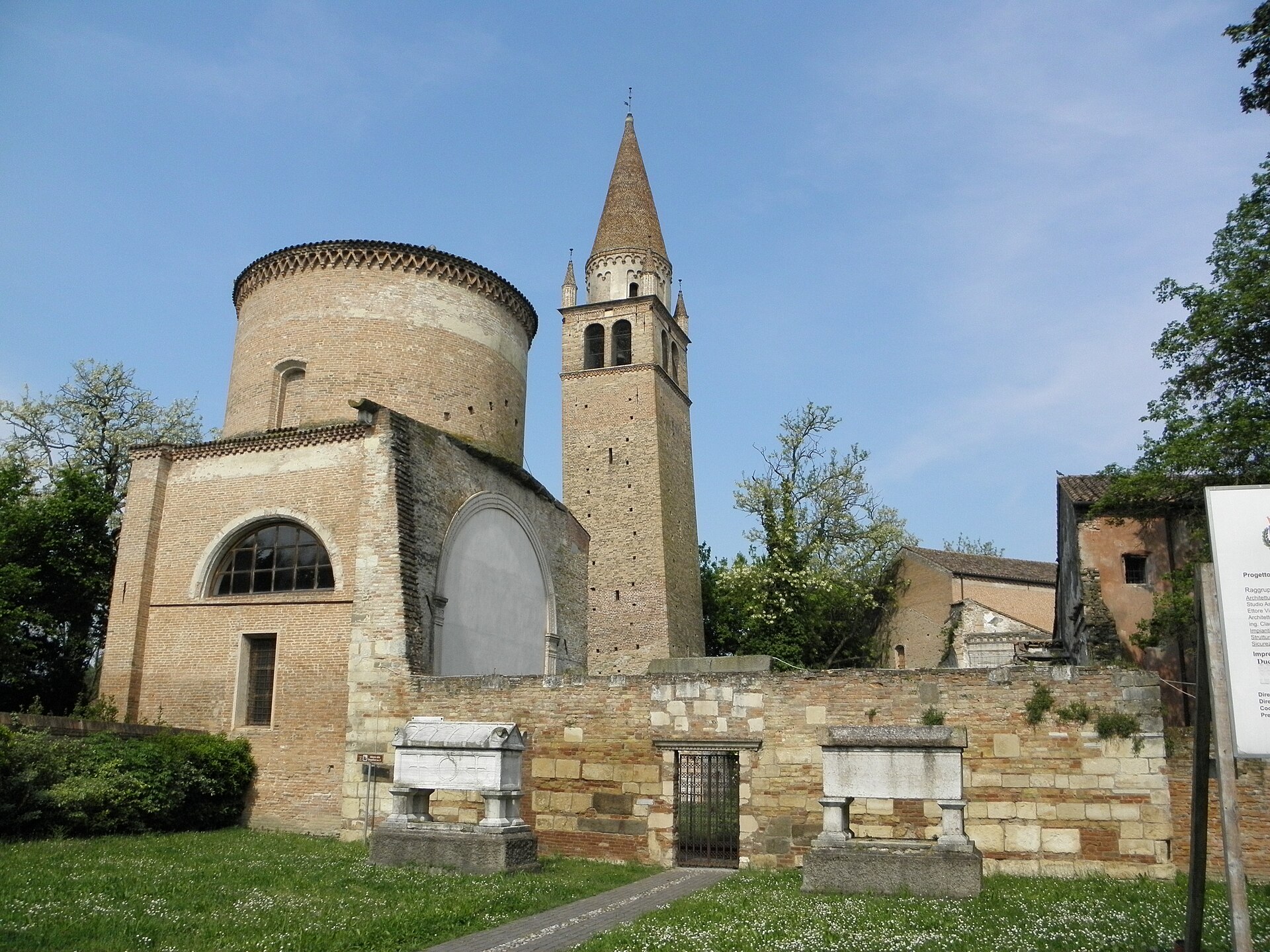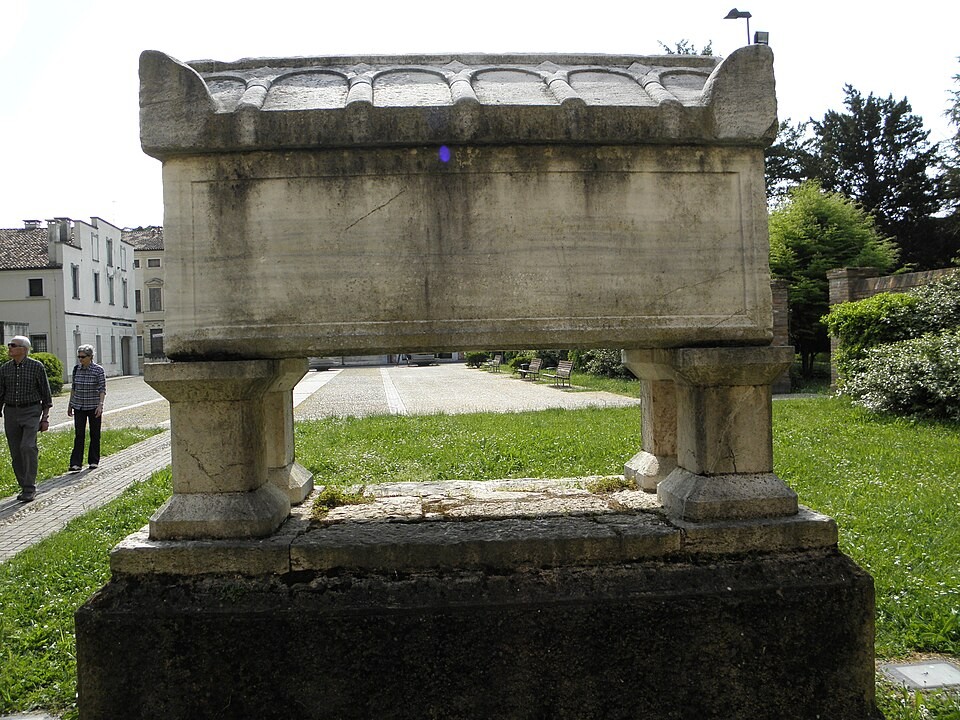
In front of the doorway of the ancient Abbey of the Vangadizza, in Badia Polesine, stand two stone sarcophagi. Passers-by barely glance at them. And yet, according to tradition, one of them holds a man from whom some of the most powerful dynasties in Europe descend.
His name was Alberto Azzo II d’Este. He was born in 997. He died right here, in the monastery of the Vangadizza, on 20 August 1097. He was therefore about a hundred years old: an extraordinary age for the Middle Ages. Beside him, tradition has it, lies his first wife, Cunegonda of Altdorf.
From his son Welf (Guelfo) descends the Guelph line, dukes of Bavaria and Saxony. From that line, down the centuries, descends the House of Hanover, and from it the present reigning house of the United Kingdom. It is a thought to make you smile: a fine thread links a silent stone in the Polesine to the British crown.
But the Vangadizza also guards another story, humbler and stranger. In 1066 it was Azzo II himself who had a young French hermit, Theobald of Provins, buried here. Theobald had died near Vicenza after a life of penance. He became a saint, and the patron of charcoal burners.
Here the story leaps forward more than seven centuries. A secret society took its name from the charcoal burners: the Carboneria. And the Carbonari, according to the Catholic Encyclopedia, venerated St Theobald as their patron.
There is no direct historical link between the abbey and the Carbonari. It is a coincidence. But it is an evocative one, because here in the Polesine, just a few kilometres away, the Carbonari of Fratta would pay for their dream with prison.
The name of the place also tells a story of toil. Vangadizza probably comes from vanga, the spade. Many of the abbey’s lands were marshes wrested from the Adige, ground won by those who worked it.
So, standing before those two sarcophagi, you can try a small exercise of imagination. Picture a marquis who saw a whole century go by, and chose to end his long life here. A hermit who came from France, buried in this soil at that marquis’s wish. And a group of patriots who, seven hundred years later, would call upon the same saint.
Three stories far apart in time, bound by a single place. That, perhaps, is the deepest charm of the Vangadizza: not what is still standing, but what it goes on telling.