Before it was the name of a province, «polesine» was an ordinary word. It meant, along the course of a river, a strip of flat, almost island-like land, often covered in scrub, cut off from the banks by floods and currents. The lower Po was full of them.
The origin is curious. The medieval Latin pol(l)icinum, «marshy ground», is thought to go back to the Byzantine Greek polýkenos, «having many voids». Over time the word is thought to have merged with the Latin pullus, «soft». A perfect definition for a landscape of water, low rises and fragile land.
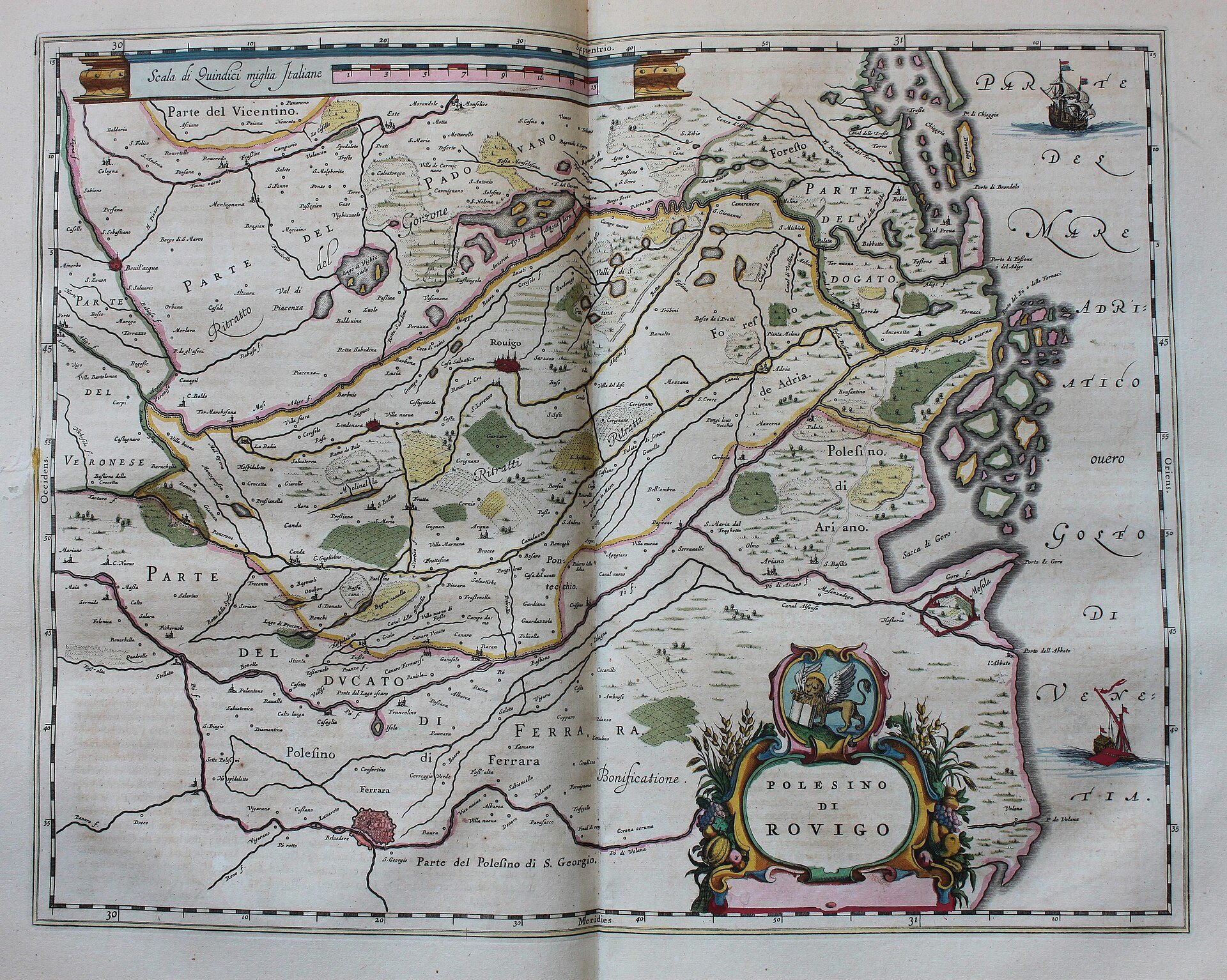
Today the name refers to the province of Rovigo, squeezed between the Adige and the Po. But you only need to look at a map of the Delta, with its islands between the branches of the river, to find the original meaning again.