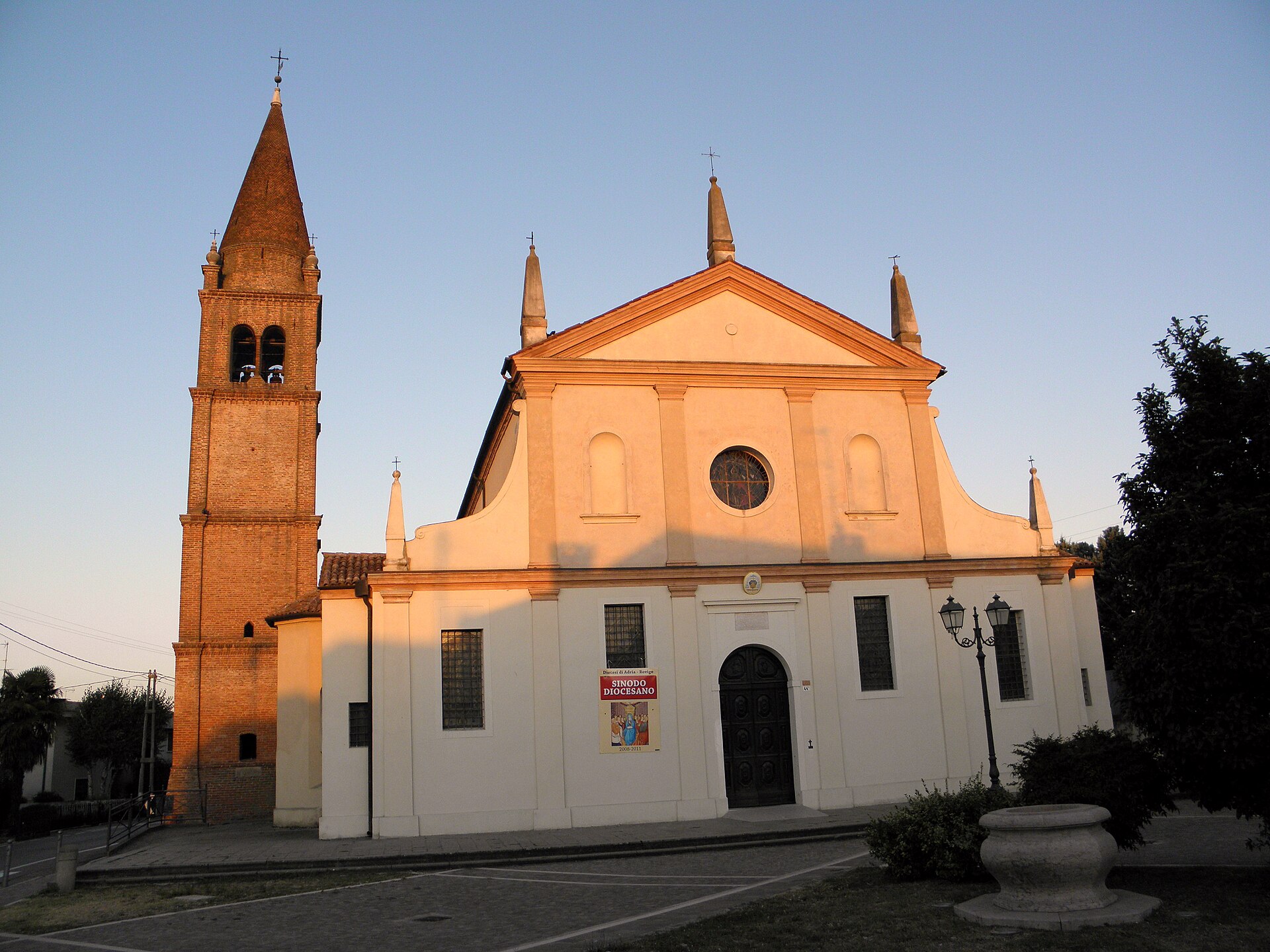
In Adria, the town that gave its name to the Adriatic, two cathedrals face each other just a few steps apart. The larger is the Cathedral of Santi Pietro e Paolo (Saints Peter and Paul), seat of the Diocese of Adria-Rovigo. The other is the Old Cathedral, dedicated to San Giovanni, which still serves as a parish church. Together they tell more than a thousand years of religious history.
The church that kept being reborn
The old church was rebuilt several times. In 1407 it was reconstructed with three naves. In 1463 it was restored, and on 22 May 1644 it was consecrated anew. In 1686 the bell tower was rebuilt as well.
In 1830 the decision was taken to give the town a new cathedral, and part of the old building was pulled down. The new cathedral was already in use by 1836, with altars, organ and choir loft. Its consecration, however, came only on 10 September 1882, at the hands of Bishop Giuseppe Apollonio.
It is an imposing building: about 70 metres long and 33 wide, with a free-standing bell tower some 60 metres high. The brick façade was never finished, like a sentence left halfway.
The apostles underground
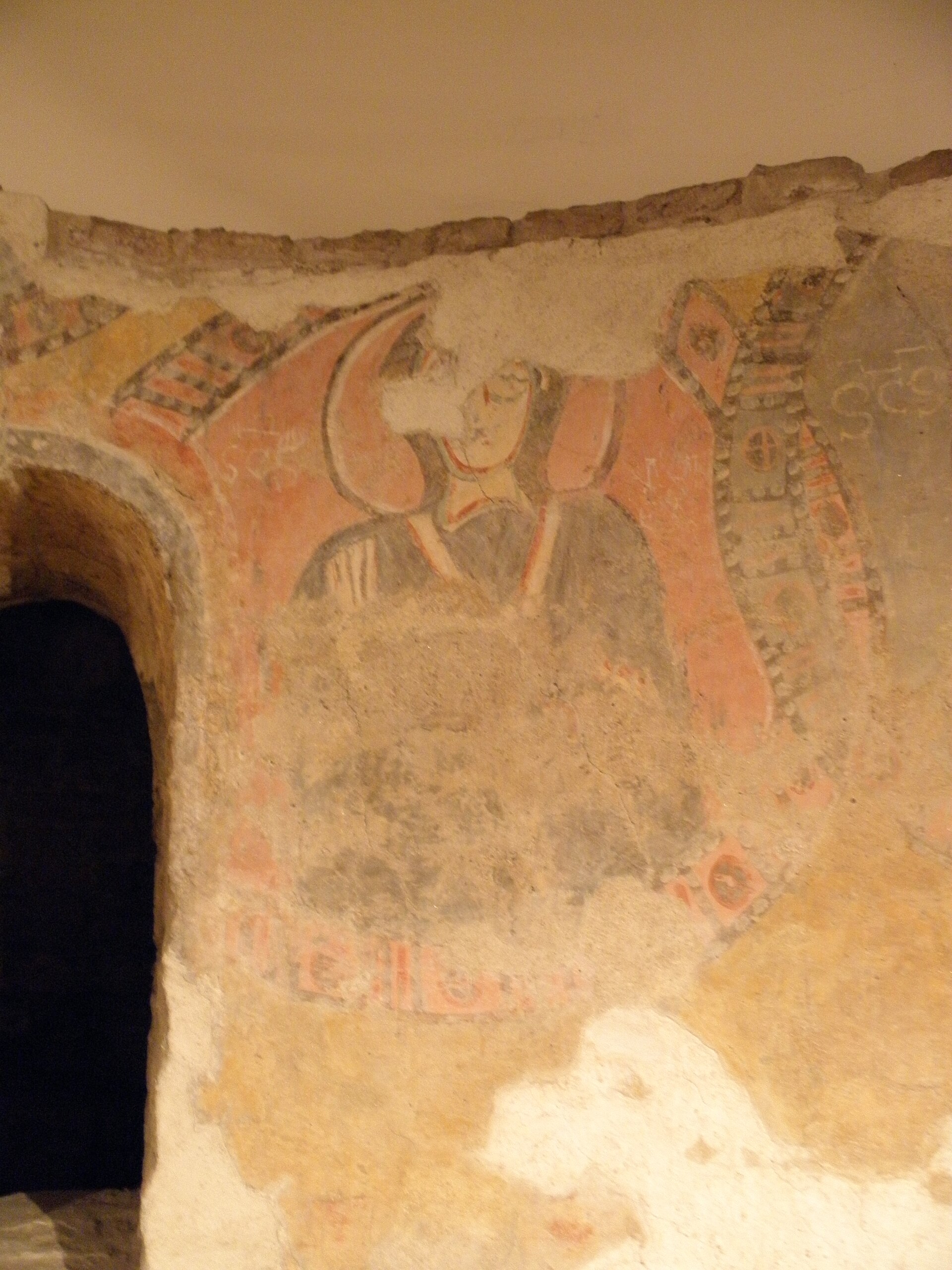
It was the excavations of 1830 that brought the most moving discovery. A small frescoed chapel came back to light, perhaps the apse of an even older cathedral.
From its walls six apostles look out from roundels, the so-called imagines clipeatae, accompanied by Latin inscriptions. Sources describe their style as Byzantine or Carolingian. These are faces that cross the centuries and reach us almost in silence.
Just how old this chapel is remains an open question. Sources range between the late 9th and the second half of the 10th century, and some suggest an even more remote origin.
The crypt has also known hard trials. It was badly damaged in the great Polesine flood of 1951. Today it remains the most hidden heart of this place, the point where Adria’s history goes below the surface and becomes a story told in images.