For days it had rained without respite. In the second week of November 1951 the Po had risen higher than anyone could remember. Along the embankments men and women worked day and night with sandbags. On the evening of 14 November the river gave way.
At 7.45 pm the left bank broke at Vallone di Paviole, in the municipality of Canaro. A quarter of an hour later a second breach opened at Bosco. At around 8.15 pm came a third, at Malcantone. Bosco and Malcantone both lie in the municipality of Occhiobello. Through those three wounds poured some 7,000 cubic metres of water a second: two thirds of the river’s entire flow.
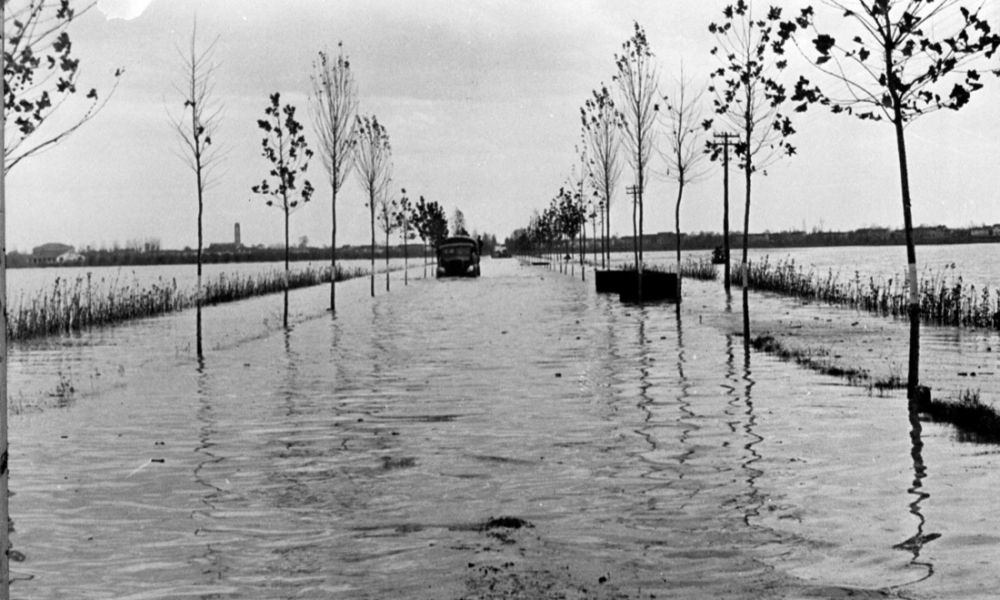
In three days the water covered about a hundred thousand hectares, two thirds of the province of Rovigo. It stood two metres deep on average, and up to six in places.
That same night, at Frassinelle, came the tragedy the Polesine has never forgotten. A lorry crowded with refugees, people trying to reach safety, was caught by the water on the road. There was no escape. Ever since, it has been remembered as the ‘lorry of death’. Sources speak of 84 or 89 victims: most of the hundred or so who died in the whole flood.
The water did not stop. When the Canalbianco gave way in several places, Adria, then a town of about 35,000 people, was completely cut off. The refugees numbered between 180,000 and 190,000.
It was post-war Italy’s first great emergency. Help came from all over the world. This was the time of the Cold War, and accounts recall that the aid convoys carried the name of the sending nation in huge letters.
Then came the longer time, the time after. Many never came back. Between 1951 and 1961 more than 80,000 people left the Polesine. In some municipalities the population halved in the decades that followed.
Those who stayed rebuilt. The embankments were raised by about four metres, as those who lived through those days at Occhiobello still recall.
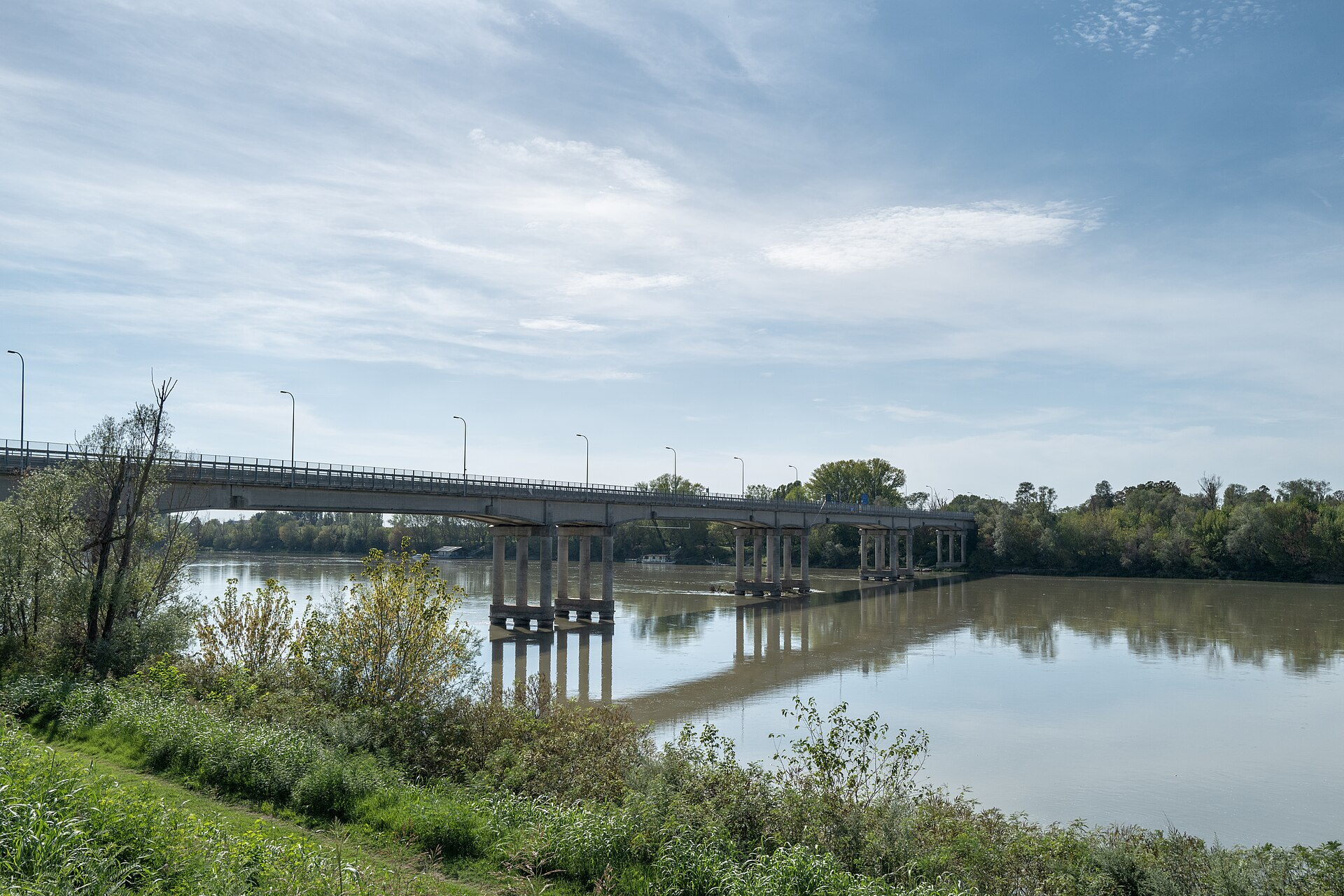
Today the river flows within those higher banks, wide and calm. But the night of 14 November 1951 is not just a date in the history books. It is a dividing line in the story of this land: there is a Polesine before and a Polesine after. And whoever climbs the embankment and looks at the water can try to imagine the sound of that night.