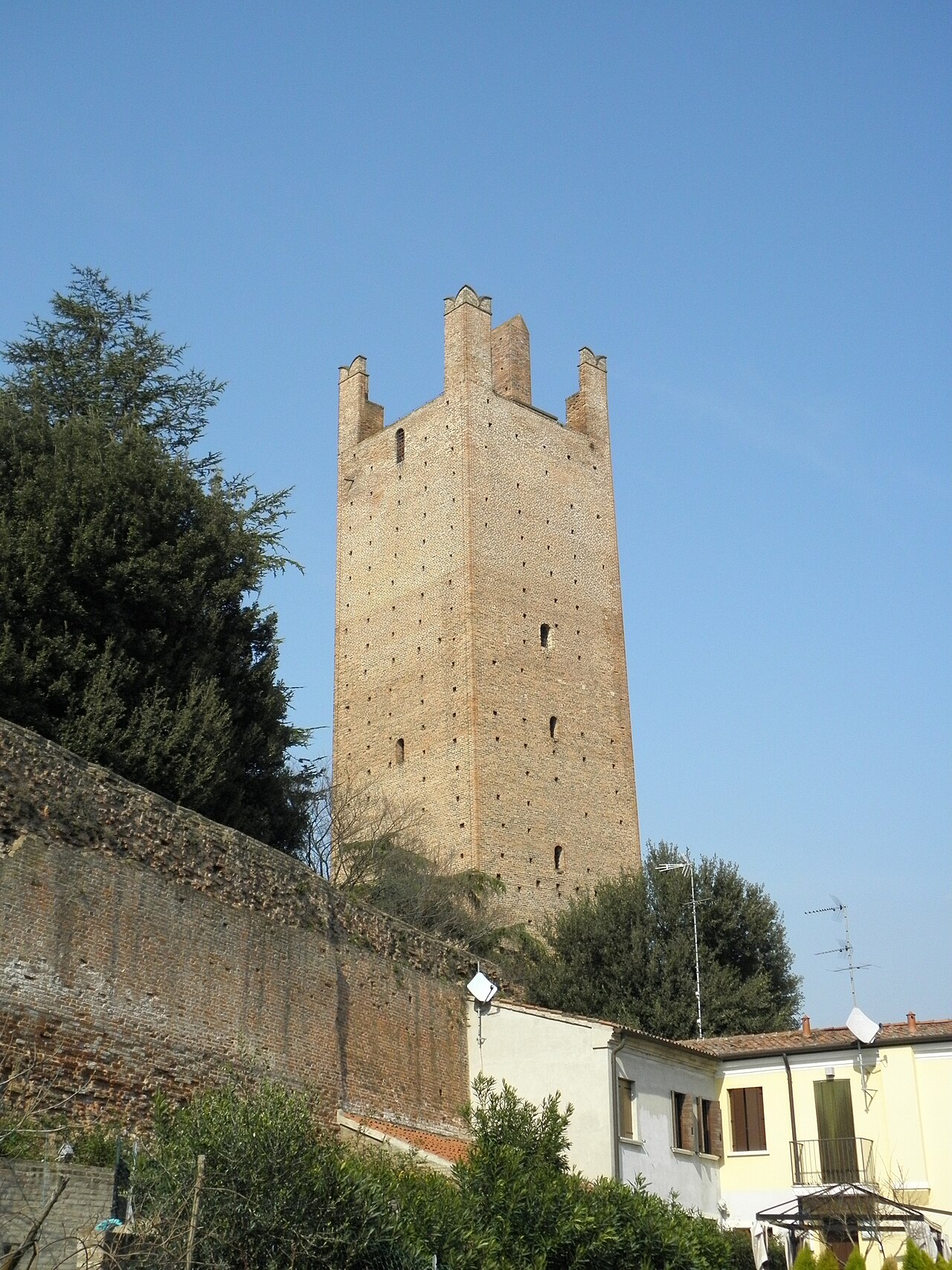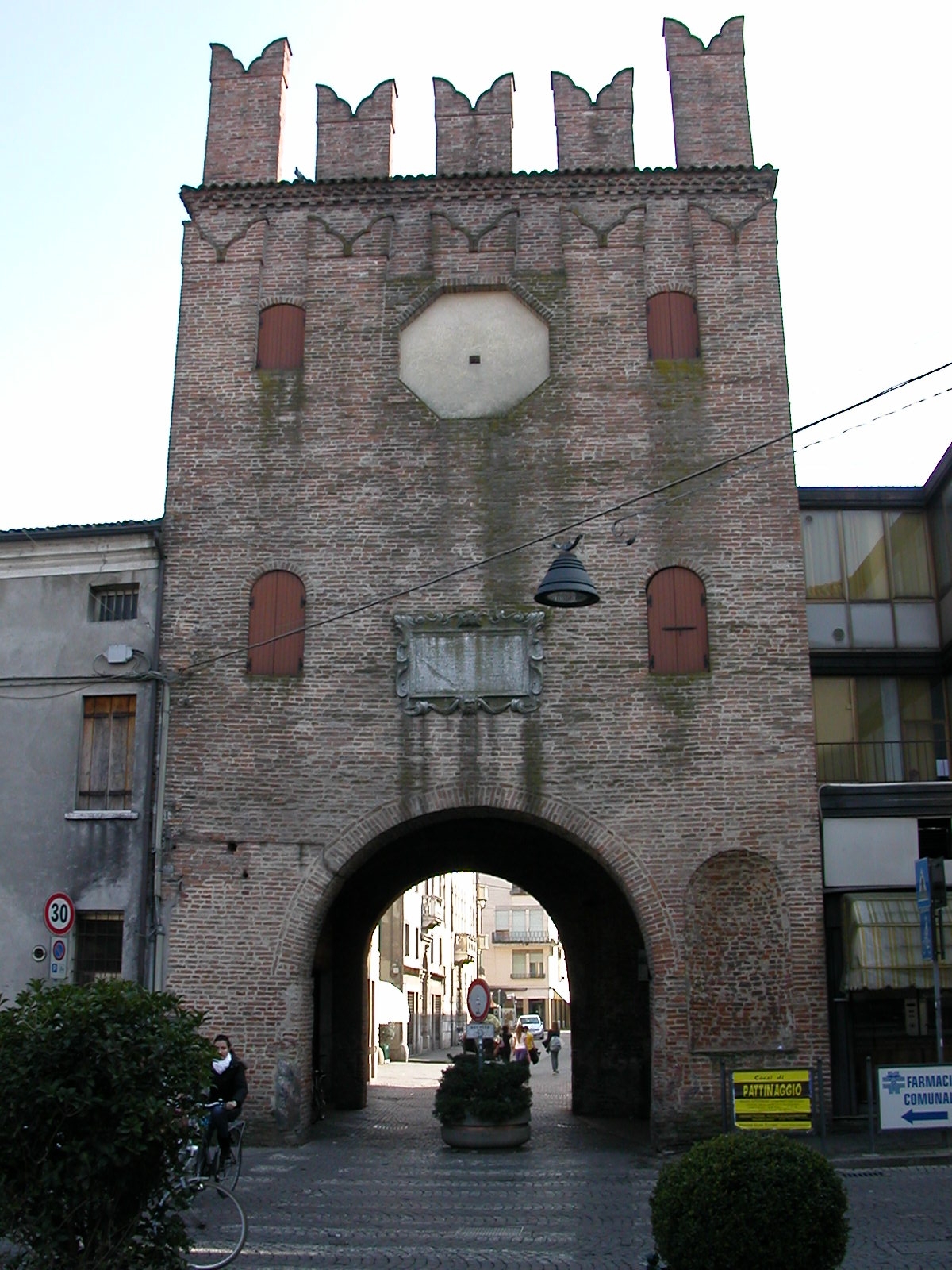
Rovigo was once a walled city. In the 1130s the town’s viscounts, ruling in the name of the Este family, began a brick enclosure. According to the Regione Veneto, the pentagonal walls were completed in the first decades of the 14th century. Several gates opened along the circuit, each named after a nearby church or street. For centuries, anyone arriving in Rovigo had to pass through one of them.
The lost gates
The gates met different fates. Porta San Giovanni, built in 1503, took its name from a small church nearby and was torn down in the mid-1800s. Porta Arquà, also from 1503, was raised under the governorship of Andrea Erizzo and bore the arms of Doge Leonardo Loredan: it fell in 1845. Porta San Francesco, rebuilt in 1697, was demolished in 1892. The Portello, the small pedestrian gate by the castle, vanished in the first half of the 19th century. In less than fifty years, between 1845 and 1892, the city lost most of its historic entrances.
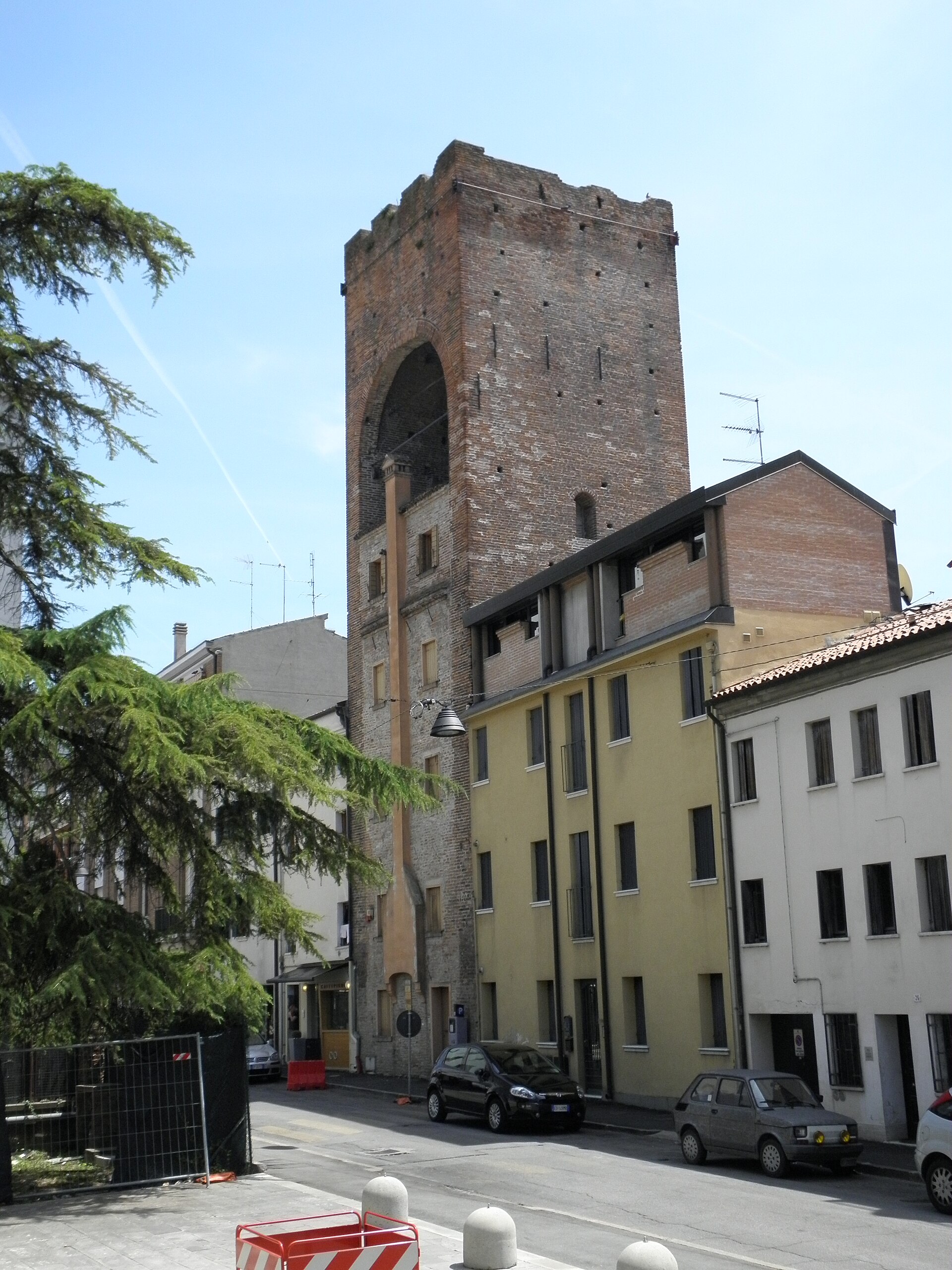
What survives is Porta San Bortolo, the remains of Porta Sant’Agostino and Torre Pighin. For the Regione Veneto, the last of these is “the only surviving watchtower” among those that once punctuated the walls. It is a modest fragment, but a precious one: the last sentry of a vanished defensive system. It has been a home since the 18th century, and you can recognise it by the great chimney on its façade. Small buildings flank it, put up over the centuries against the line of the walls.
A loop to follow
Today the course of the walls can be traced again thanks to a route suggested by the Region. You start from the Castle and continue along Corso del Popolo, once the Adigetto canal, then Via Mure San Giuseppe, Viale Trieste, Piazza XX Settembre, Via Bortoloni and Piazza Merlin. You return via Via Pighin, Via Mure dell’Ospedale and Via Grimani. Many stretches of the walls survive, absorbed into the houses. They do not always catch the eye at first glance. To find them, simply walk slowly, watching the walls.