At the gates of medieval Rovigo lived a community of Umiliati, a religious order skilled in working wool. In 1254 Bishop Guglielmo d’Este gave them permission to build a church dedicated to Saint Bartholomew.
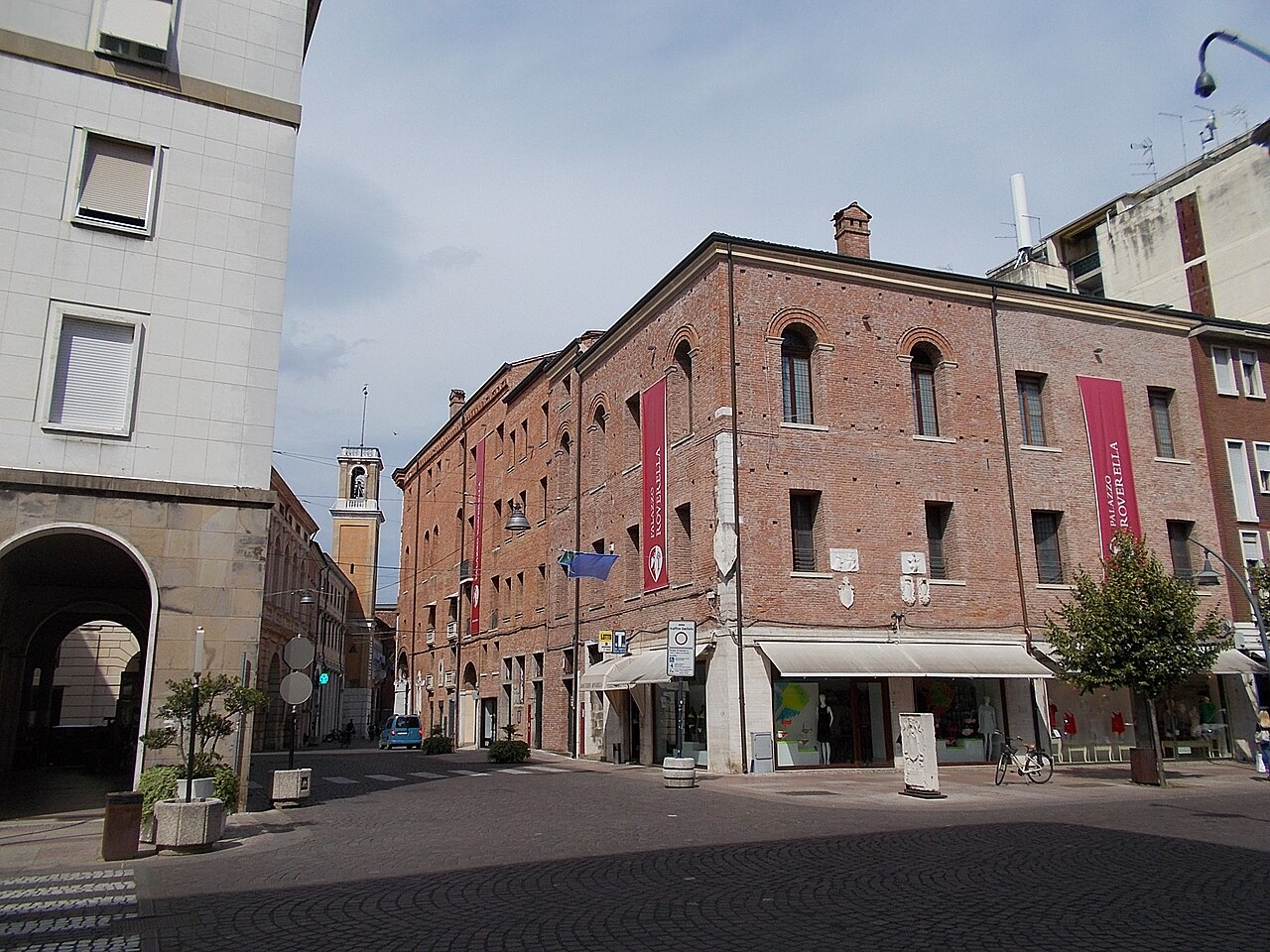
Two centuries later everything changed. In 1474 Pope Sixtus IV suppressed the Umiliati provostry and entrusted the complex to the Benedictine monks of Monte Oliveto, the Olivetans. A decisive role fell to Cardinal Bartolomeo Roverella, Bishop of Adria and brother of Nicolò, abbot general of the Olivetans: he gave up the commendam, the church benefice, he had received in 1444. Within a few decades the monastery, born on the outskirts, had become an economic and cultural centre of the city, with more than a thousand campi of land (a local field measure) across the Polesine and the Padua area.
A new church, then a Baroque one
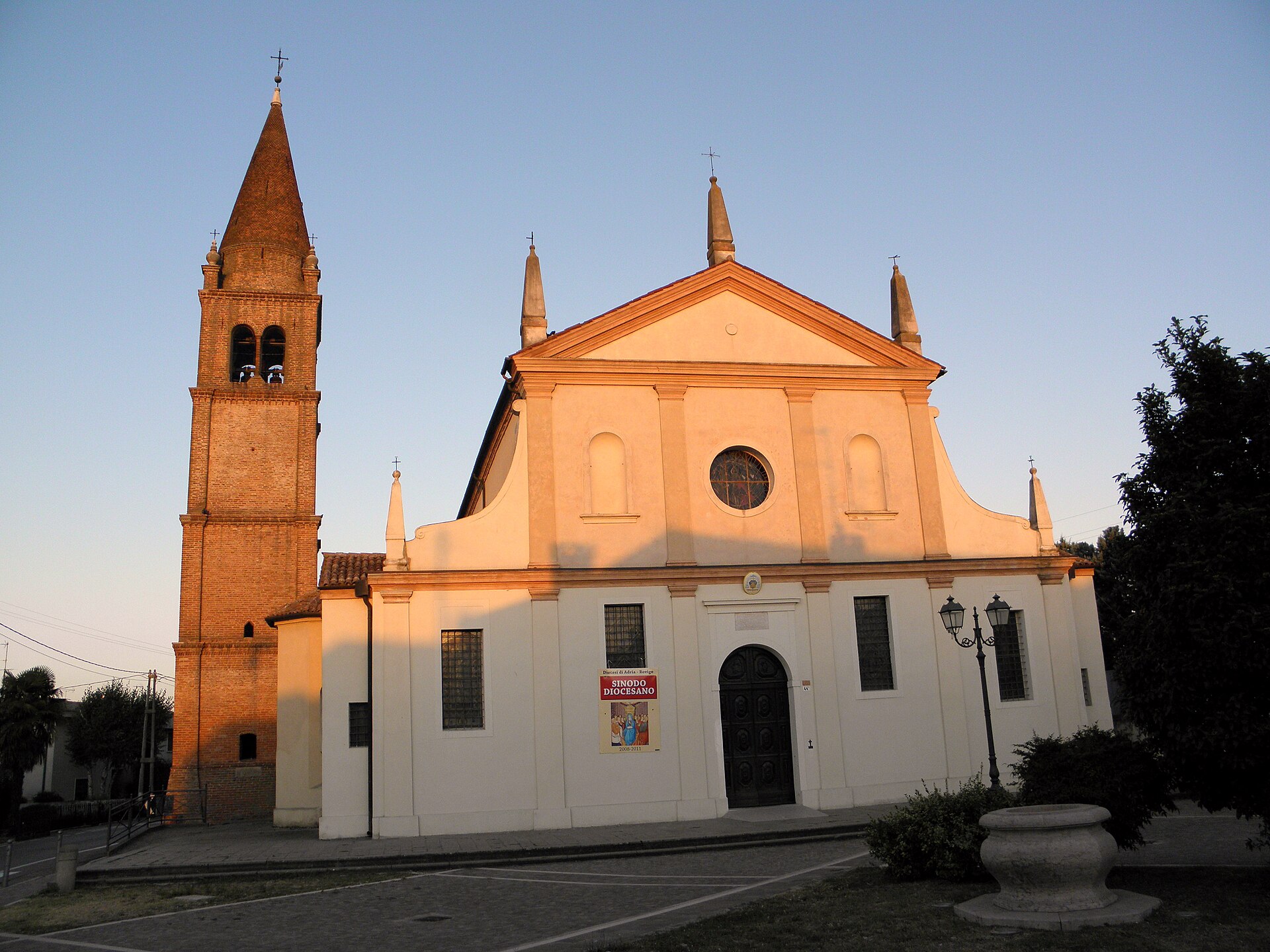
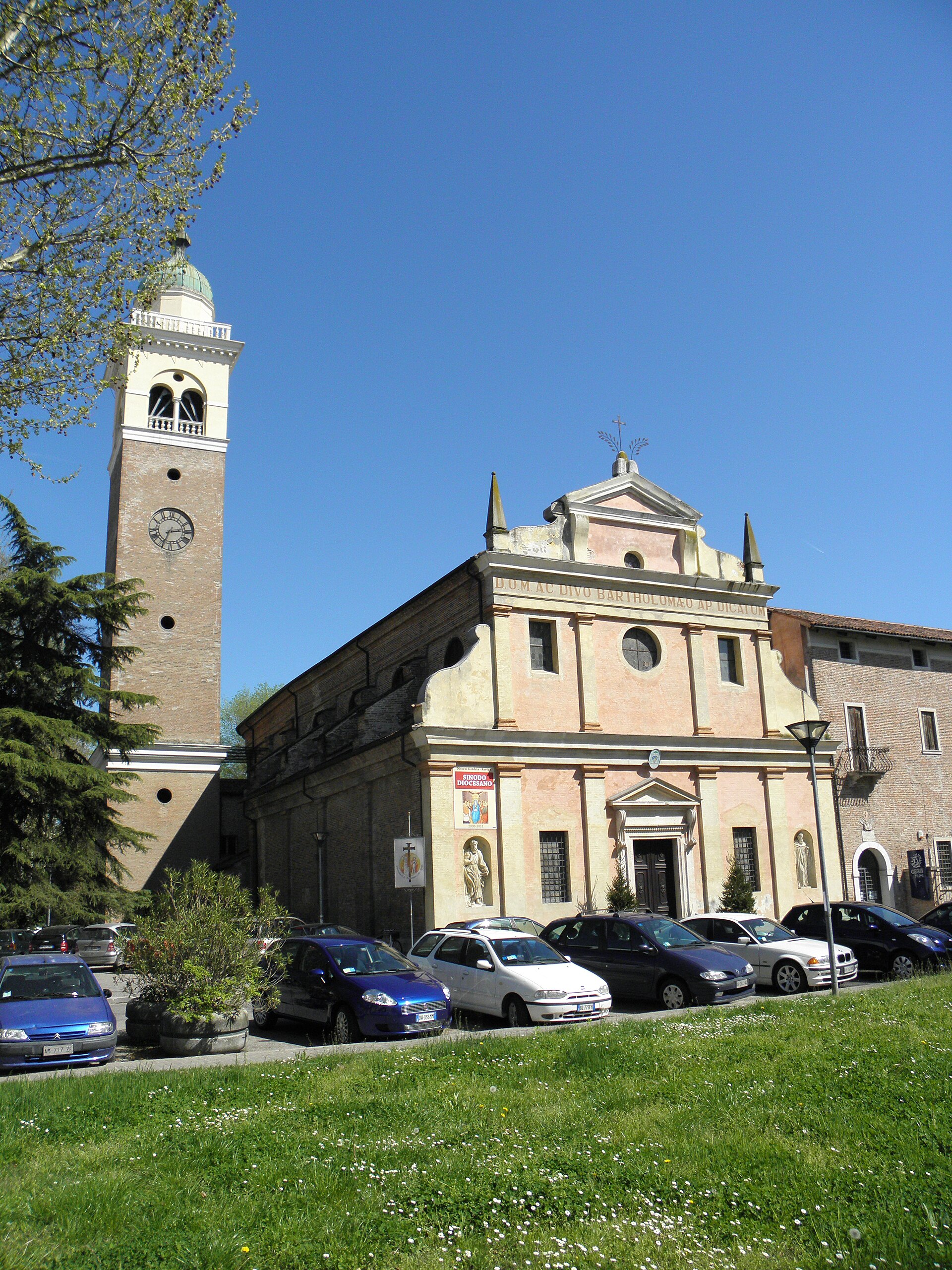
The present church was begun on 21 March 1562. According to Abbot Alessandro Rossi the design was by Bartolomeo Bonarizzo, but the documents also mention Ferrarese masters from the Olivetan circle of San Giorgio in Ferrara. Alberto Schiatti designed the bell tower, completed in 1592.
The great Baroque renewal came between 1685 and 1697. These are the years of Francesco Fasolato’s high altar (1691) and of the altarpiece of the Martyrdom of Saint Bartholomew by Benedetto Gennari, nephew and pupil of Guercino. Gennari delivered it in July 1697 and signed it as “Primario Pittore di S.M. Britannica”, principal painter to His Britannic Majesty. In 1778 came the organ by Gaetano Callido, still in working order.
From monks to museum
In 1797, with the arrival of the French, the monastery was suppressed. The decree of 25 April 1810 drove the monks out for good, and the church became a chapel of ease of San Francesco. In 1844 Giacomo Giro donated the monastery to the municipality to serve as a home for the poor, a use that lasted until the 1970s. In 1956 the church became a parish again.
The complex has been restored since 1990. Since 2001 it has housed the Museo dei Grandi Fiumi (the Museum of the Great Rivers), which tells the story of the Polesine from prehistory to the Renaissance. It does so in the very rooms where the monks once lived: spaces that for centuries sheltered the Olivetans now keep the history of the land between the Adige and the Po.