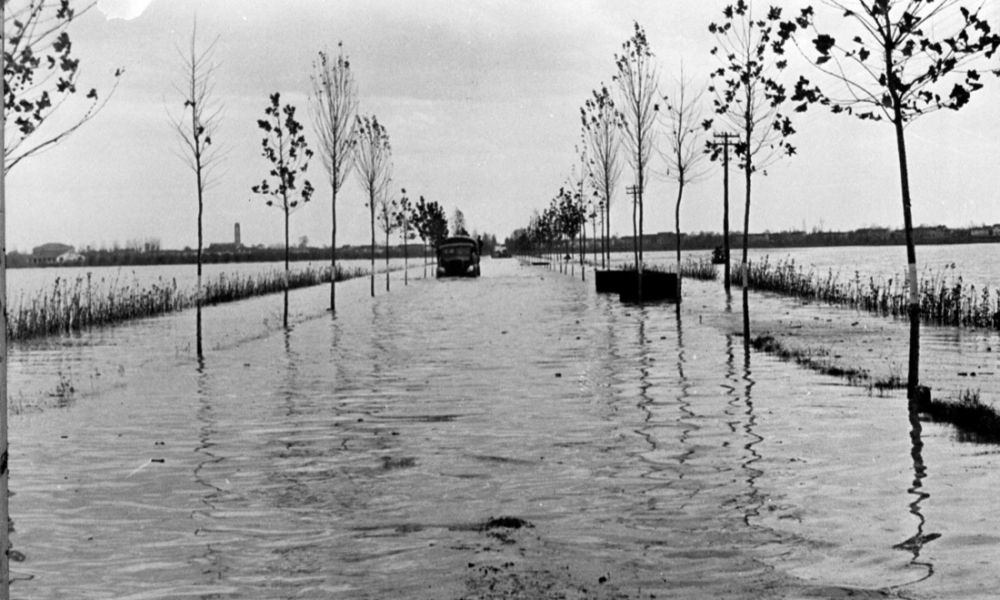
November 1951. The Po bursts its banks and the Polesine goes under water. Among those who rush to help is a 26-year-old from Rovigo: Gian Antonio Cibotto, born in Rovigo on 8 May 1925. He follows the rescuers, listens to people, notes down the tragedies and the acts of solidarity.
Some of those notes first appear in newspapers. In 1954 they become a book, Cronache dell'alluvione (Chronicles of the Flood), published by Neri Pozza. It is his debut. Giovanni Comisso calls it a serious document of an event that had united the country. Eugenio Montale, in the Corriere della Sera, senses that Cibotto is about to become «un regolare uomo di penna» (a proper man of letters). The book would return to the shops several times: from Rizzoli in 1960 under the title La rotta, from Marsilio in 1980 under its original title.
Montale was right. Cibotto became a journalist and a literary and theatre critic, writing for Il Resto del Carlino, Il Giornale d'Italia and above all Il Gazzettino. From 1963 to 1999 he sat on the literary jury of the Premio Campiello. In 1979, as artistic director of the Teatro Stabile, he reopened Venice's Teatro Goldoni with a Locandiera.
The Polesine remained at the heart of his writing. In 1961 he published Scano Boa, a novel set on a scanno, a tongue of sand just off the mouth of the Po di Pila, and inspired by the figure of the sturgeon fisherman. The book won the Premio Latina and was made into a film directed by Renato Dall'Ara. La vaca mora followed, and Stramalora, devoted to the Vajont disaster.
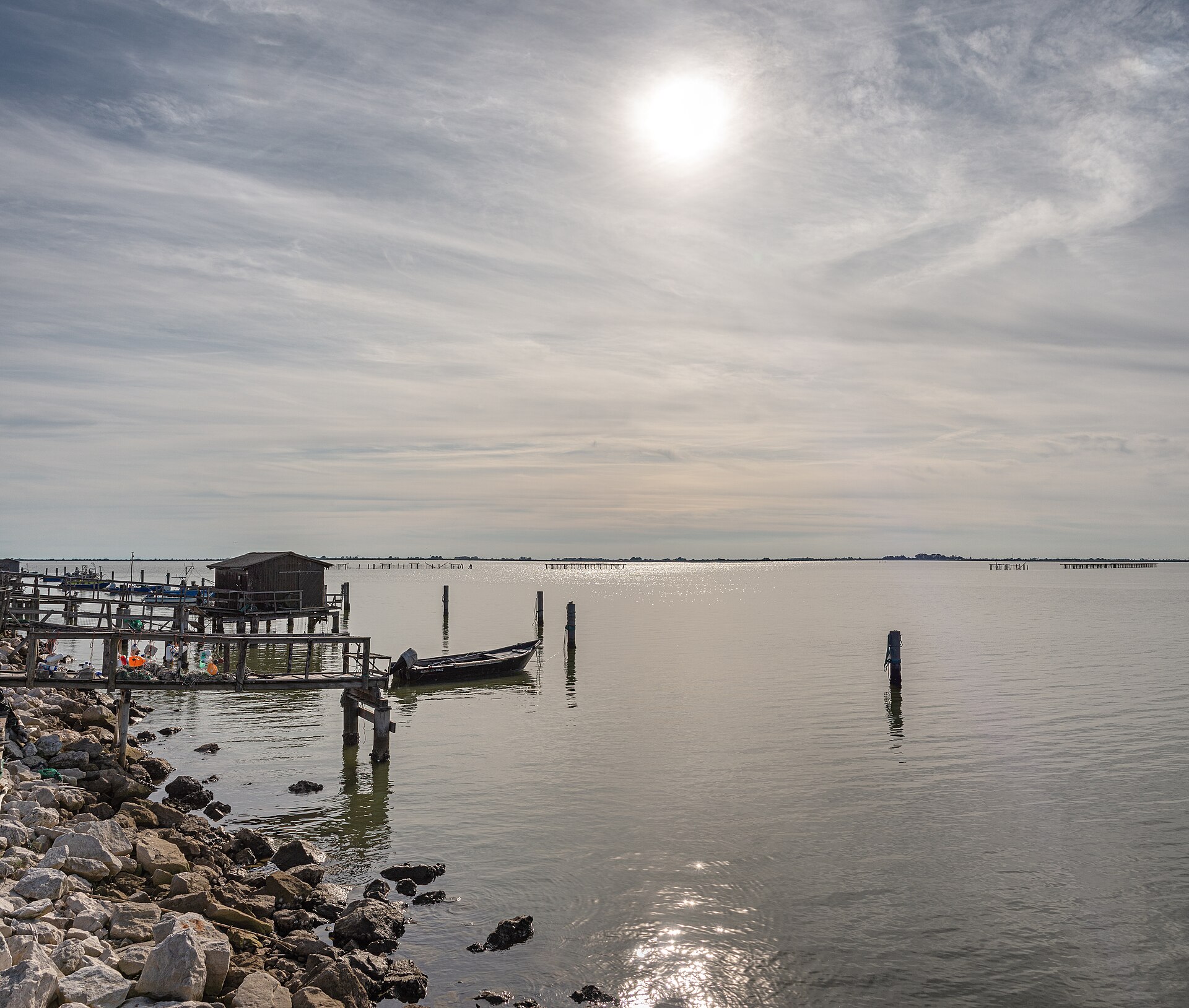
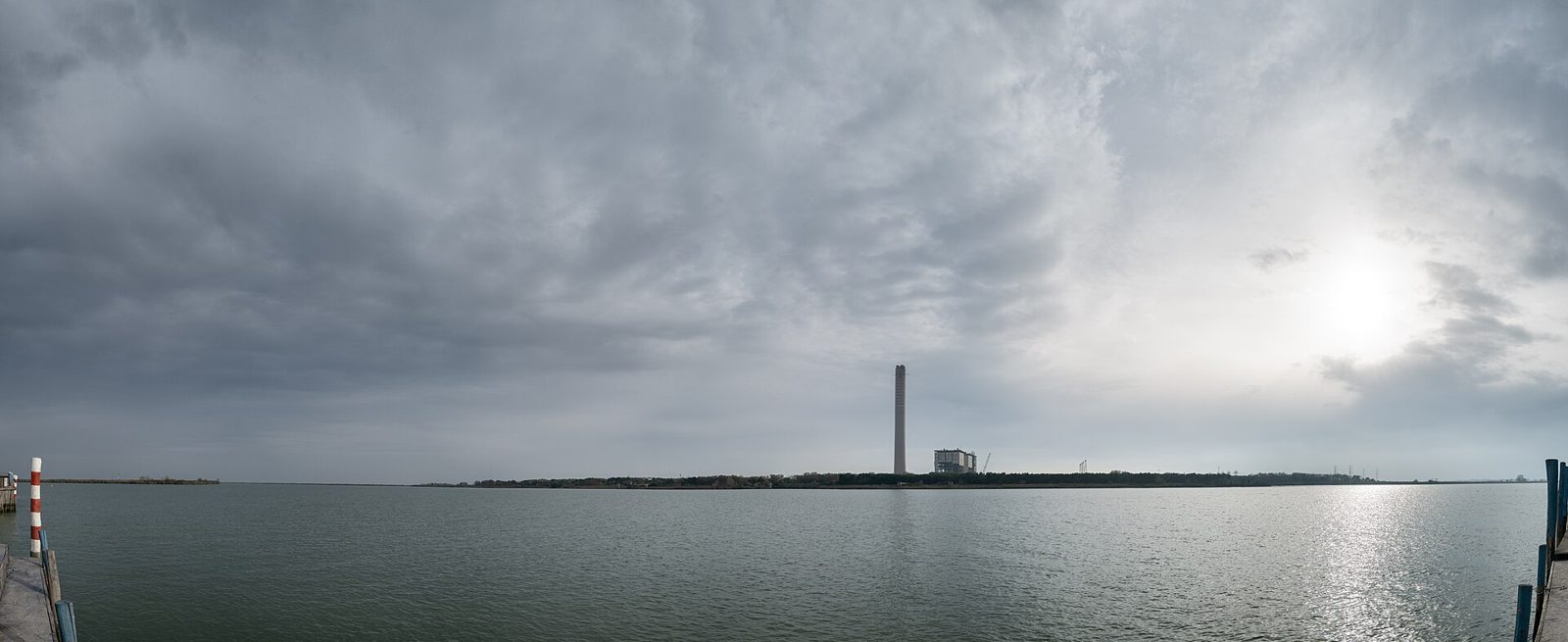
Cibotto died in Rovigo in 2017. To meet his Polesine, go to where the land ends. Scano Boa is reached by boat from Pila or Ca' Tiepolo, in the municipality of Porto Tolle. You cross reed beds and lagoons and arrive at a wild beach, with driftwood brought down by the river, dunes, tamarisks and a reed hut hidden among the vegetation.