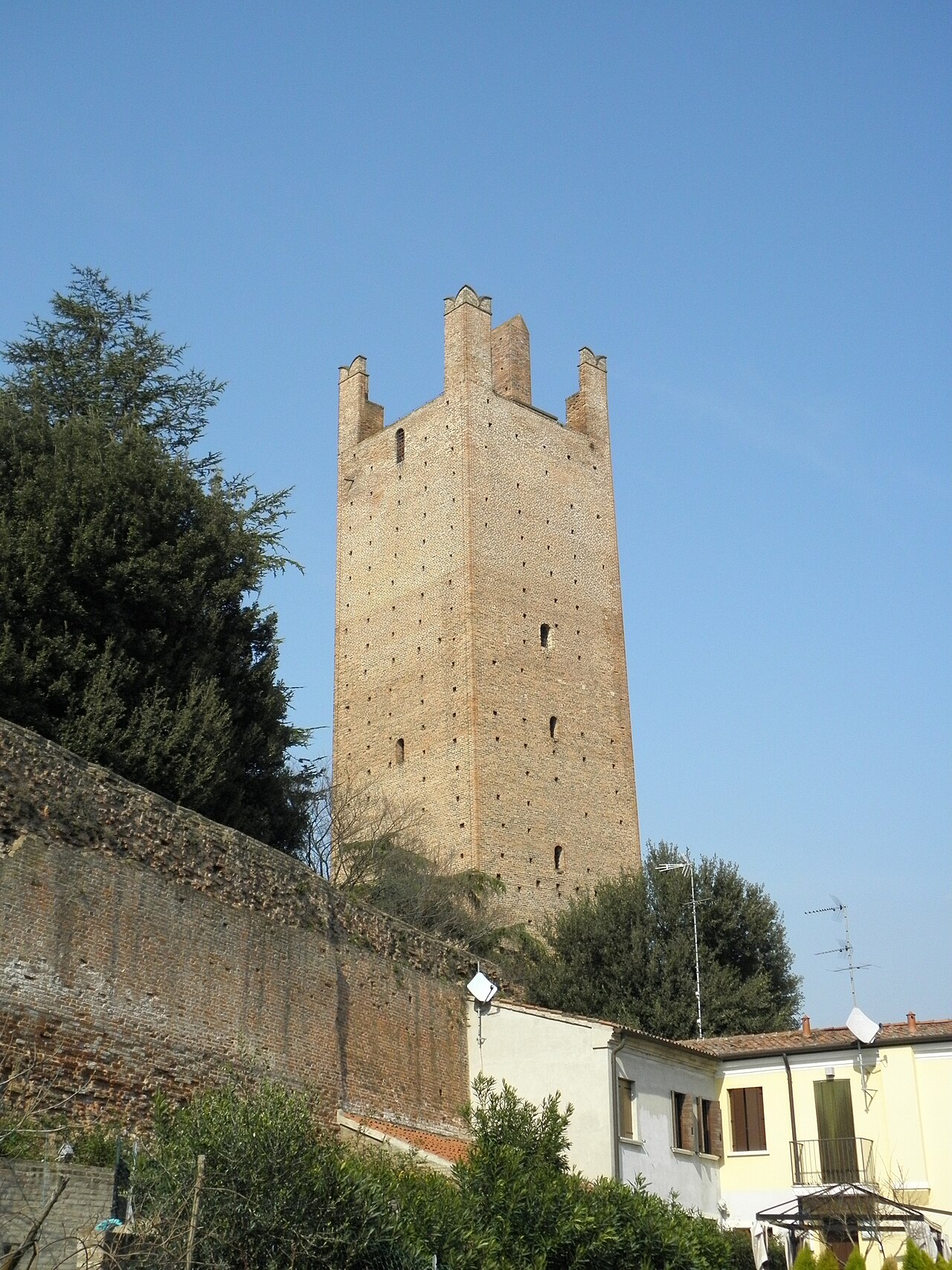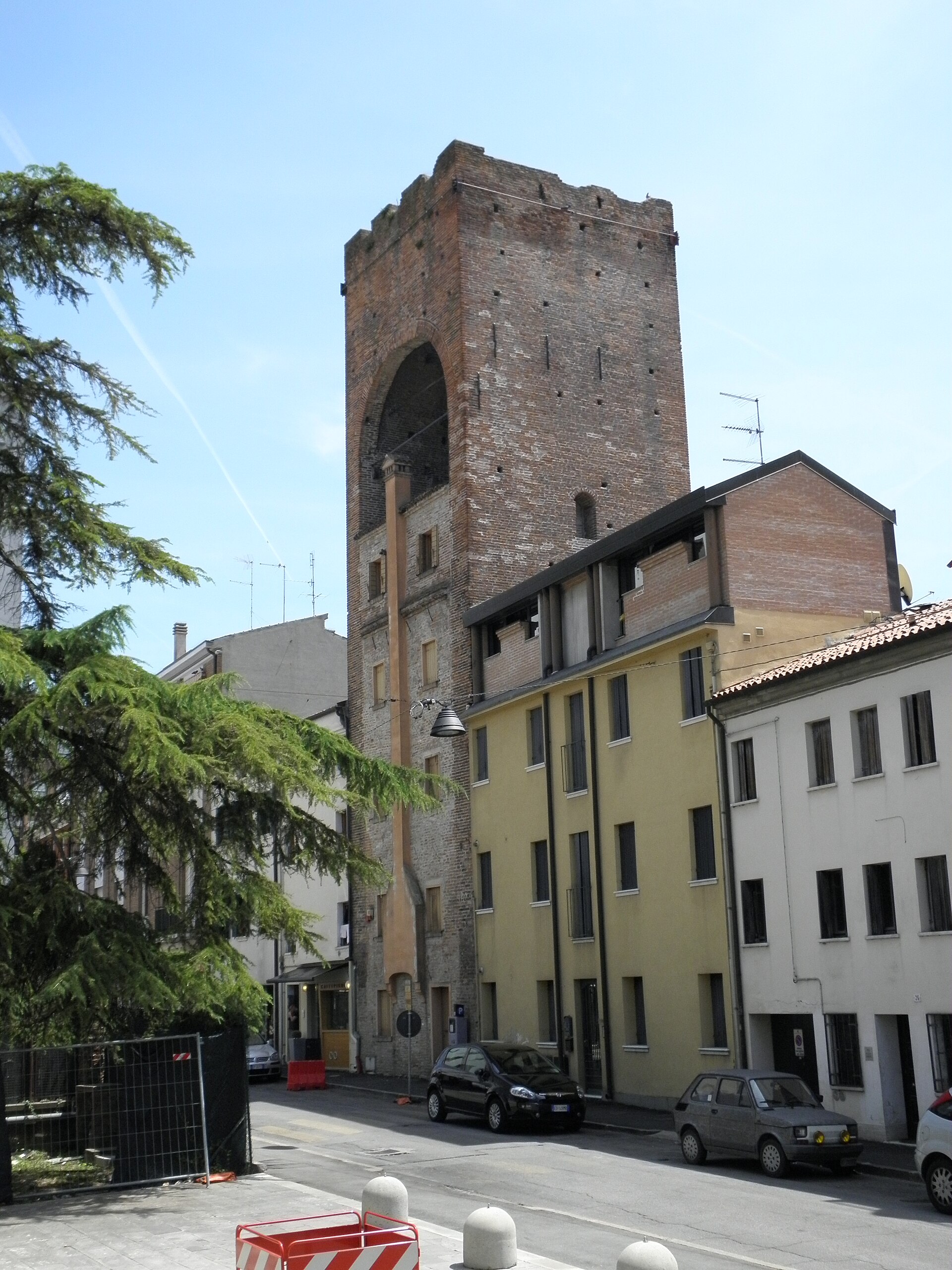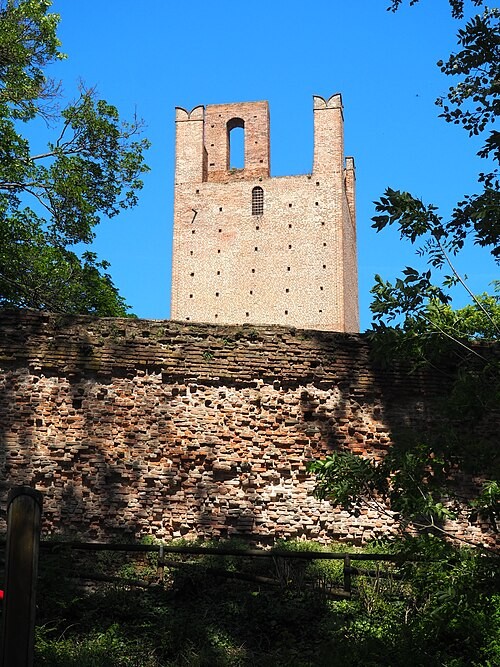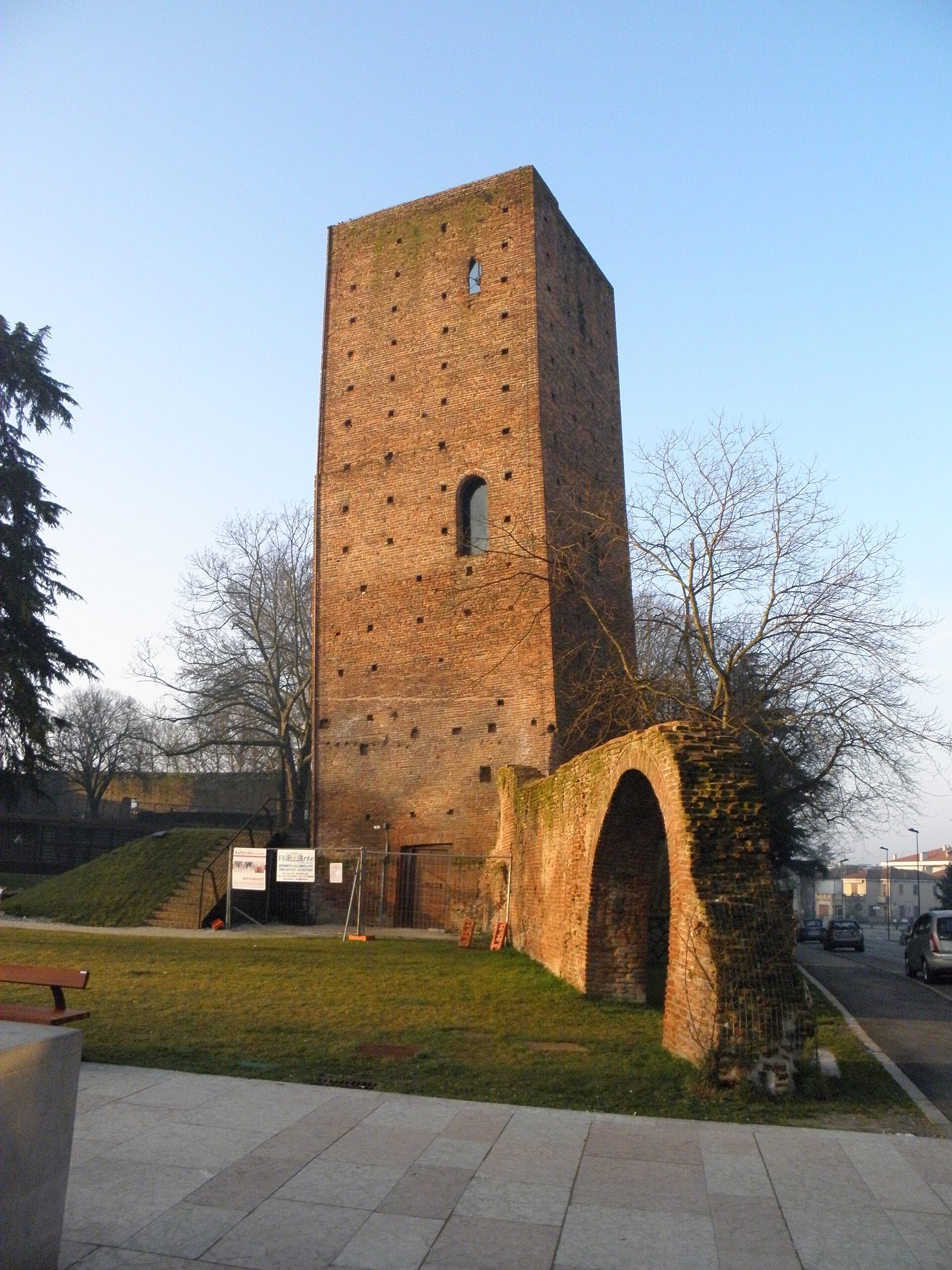
Arrive in Rovigo across the plain and you see them from afar. Two brick towers rise above the rooftops: one very tall and battlemented, the other truncated, as if snapped by a blow. They are what remains of the castle from which the city was born. And they keep a secret you notice only when you look closely: both of them lean.
To understand why, you have to go back a thousand years. In the 10th century the bishop-counts of Adria chose a strip of land amid the marshes to build a fortress. The water was both a defence and a threat. It made the castle hard to attack. But the ground beneath it was soft, made of water and silt, anything but stable.
Over the centuries the castle changed hands several times: the Este, the Carraresi, and finally the Venetian Republic. Each strengthened it in their own way. And each, without meaning to, kept piling weight onto that fragile ground.
The taller of the two is the Torre Donà, considered one of the tallest medieval towers in Italy. The other is the older one, and today everyone calls it the Torre Mozza, the “truncated tower”. Over time its upper part collapsed. That maimed appearance gave it its popular name.
Faced with two crooked towers, you might expect a curse or a spell. There is none here, and there is no need to invent one. The explanation is written in the soil. The enormous weight of the bricks slowly made the marshy bed of the Polesine give way. The towers tilted. And the subsidence also played its part in the collapse of the Torre Mozza.
It is a story without ghosts, but no less evocative for that. It tells of a city built on ground that moves. The same ground of water and silt that, over the centuries, the rivers of the Polesine have flooded, shifted and redrawn.
In the 19th and 20th centuries most of the fortifications were demolished. Almost nothing of the castle survived. The two towers, bowed but standing, remained: stubborn witnesses to a vanished age.
Today they are restored and lit up at night. In the garden at their feet you can stop and look up. A little attention is enough to see that they are not straight. And a little imagination is enough to see, all around, the castle that is no longer there.