It is said that, in the 10th century, the Bishop of Adria lived through days of deep unease. His city was ancient and glorious, but it was no longer safe. Raids left it exposed. The bishop’s seat needed a better-protected refuge, out among the waters and marshes of the Polesine. The bishop, whom tradition calls Paolo Cattaneo, did not know where to go.
It was then, the legend goes, that one night Saint Peter appeared to him in a dream. The saint did not show him a road. He did not speak a name. He simply held out a crozier, the bishop’s staff, all adorned with red roses.
When he woke, the sign seemed clear. He must seek the land of roses. And that land, it was said, was Rovigo, where rose bushes grew wild. There the bishop had a castle raised to protect his people. And from that castle, tradition says, the city was born.
The story of the roses did not stay locked in the Middle Ages. In the 16th century it was taken up by the greatest poet of the Este court, Ludovico Ariosto. In the third canto of his epic Orlando furioso, the sorceress Melissa lists the lands that will belong to the descendants of Bradamante. Among them is Rovigo: “la terra il cui produr di rose / le diè piacevol nome in greche voci”, the land whose bounty of roses gave it a pleasing name in Greek.
In Greek the rose is rhódon. For Renaissance scholars it all added up: Rovigo was Rhodigium, the city of roses. The learned name passed from verse to books, and from books into common memory.
The roses, in short, came to Rovigo twice. First in a dream, then in a line of verse. Whether rose bushes really grew everywhere matters little today. What counts is that the city chose to see itself in that gentle image, so far from the fears it was born of: the raids, the marshes, the need for shelter.
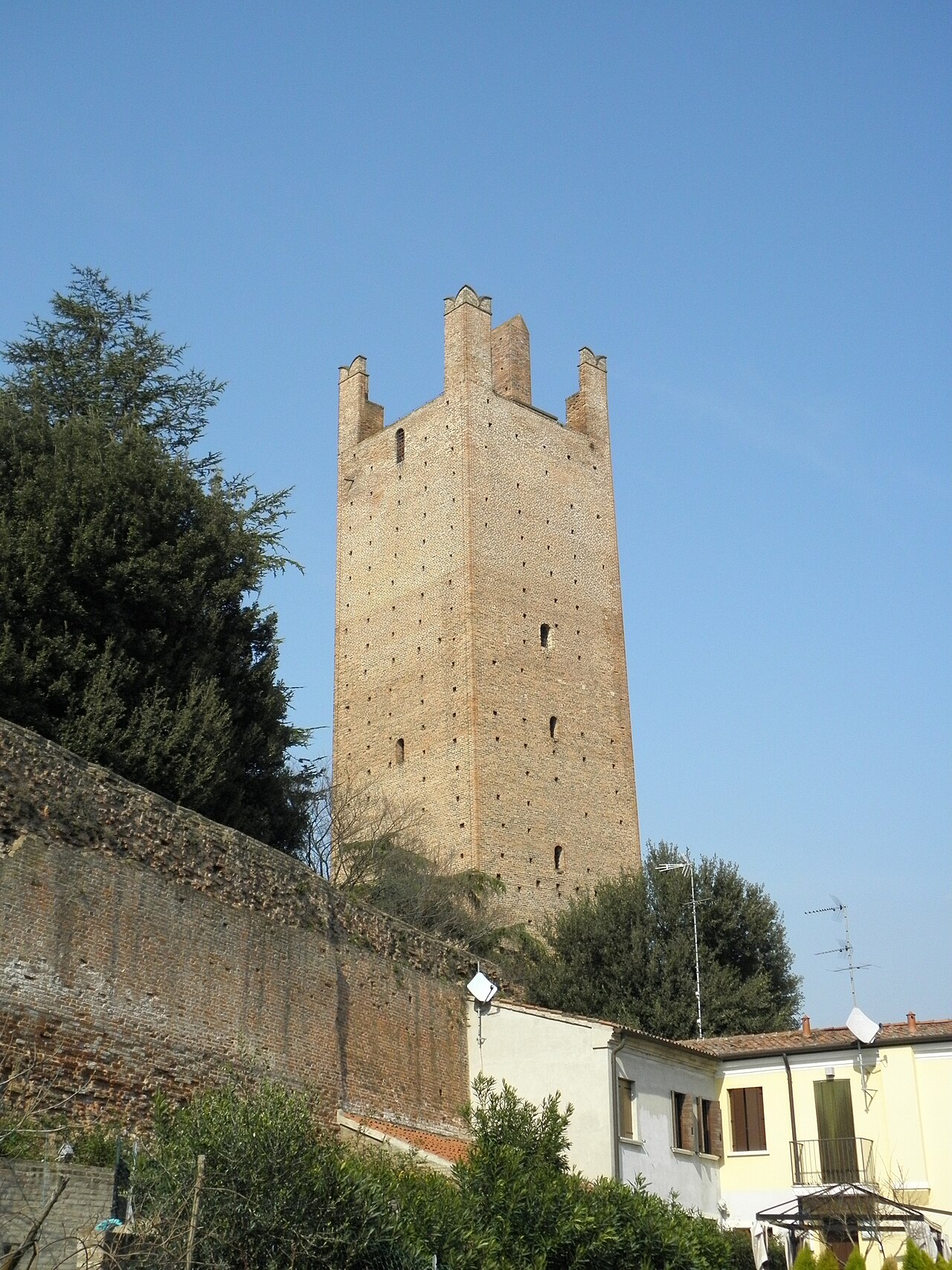
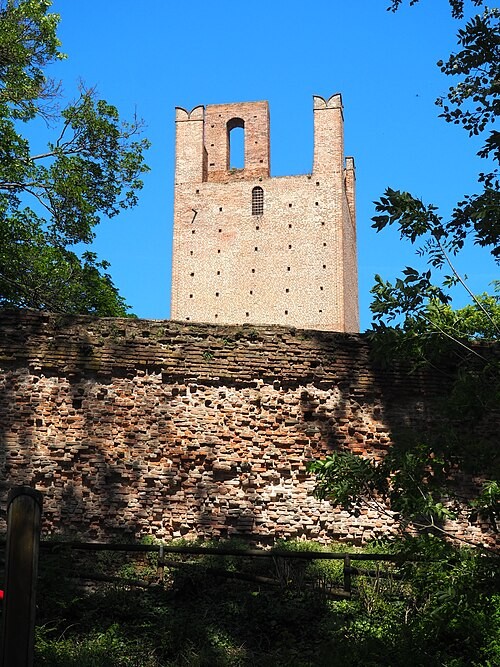
Walk beneath the castle towers and you are walking inside this story. The bricks speak of defence and hardship. The legend adds the scent.